Fishing • Paradise
Paradise: a complete fishing shooter guide for calm, controlled play
Paradise is an arcade fishing shooter on 6 Club. The gameplay feels like an action game, but the economics behave like a casino game: every bullet costs money. This guide teaches the repeatable approach that keeps Paradise fun and systematic: pick a base cannon, shoot center-lane crossings, set caps for every attempt, and treat treasure and bosses as short windows with clean exits.
SEO note: this is intentionally a long-form 3000+ word tutorial designed to rank for searches like “Paradise fishing how to play”, “Paradise fishing tips and tricks”, “Paradise boss strategy”, and “Paradise treasure chest”.
What Paradise rewards
Discipline, not spray
Caps + lane control.
Foundation
Base cannon
Most shots here.
Control
Caps
Budget each chase.
Aim
Center lane
More screen time.
Exit
Timer
Stop on schedule.

Overview: what Paradise is (and what it is not)
Paradise is a fishing shooter: targets move across the screen and you fire bullets from a cannon to capture them. It’s interactive, fast, and visually satisfying, which is exactly why it’s easy to overspend. Many people approach fishing games with the wrong mindset. They treat it like a pure action game where constant firing is normal. In a casino fishing game, constant firing is constant wagering.
The simplest way to understand Paradise is to compare it to a reel slot. In a slot, you pay once per spin, watch the outcome, then decide whether to spin again. In Paradise, each bullet is like a tiny spin. That means the “number of spins per minute” is controlled by you. If you hold auto fire while the screen is empty or targets are exiting, you are placing many low-quality spins. If you fire only on center-lane windows and you exit chases on time, you are placing fewer, higher-quality attempts.
This guide focuses on what you can control: cannon level, pace, target selection, and clean exits. It does not claim guaranteed profit. Paradise is entertainment and comes with risk. But a systematic approach makes the experience calmer, longer, and more consistent.
How to start Paradise on 6 Club (step-by-step)
Most bad fishing sessions start with one problem: no structure. You enter the game, set a cannon level based on mood, and then react to whatever appears. Structure is your competitive advantage against the game’s biggest trap: impulsive chasing.
Open Paradise from Fishing
In 6 Club, go to Our Games → Fishing and choose Paradise. Paradise is an arcade fishing shooter where you aim at moving targets and spend per bullet.
Choose a base cannon
Set a comfortable cannon level (your cost per bullet). The base cannon is what you use for most targets. If you feel tempted to raise the cannon often, your base is too high.
Use caps from the beginning
A cap is a limit on how long or how many bullets you will spend on one target. Caps prevent endless chases. Decide your cap before you focus a target.
Aim for the center lane
In fishing games, targets enter, cross, and exit. You want to shoot when targets have time on screen. Center crossings are your best shots.
End sessions cleanly
Set a time limit and a budget limit before you start. When either limit is reached, stop. The best fishing sessions end on a plan, not on a chase.
Core rule
In Paradise, you do not win by shooting more. You win by shooting better. “Better” means the target is centered, the window is long enough, and your cap is already decided.
Controls and UI: the few things that matter
Fishing games can look chaotic, but you only need to master a few controls. The reason is simple: most controls exist to influence either your spend rate (how fast you wager) or your hit efficiency (how often bullets land on target). The best Paradise players aren’t faster; they are more intentional.
Cannon / bet per shot
This is the main control that sets your risk per second. A higher cannon can help on tough targets, but it also increases burn rate. The safest approach is to keep a base cannon and step up only for short, planned windows.
Aim and lead
Targets move. Your bullets take time. Aim slightly ahead of fast targets and avoid firing when a target is about to leave the screen. Accuracy is not about speed; it is about choosing shots that have time to land.
Auto fire vs burst fire
Auto fire can be fine for farming when the screen is full and targets are slow. Burst fire is safer for premium attempts because it forces you to pause, re-aim, and remember your cap.
Target focus / lock
Some fishing UIs allow you to lock a target. Locking is powerful but dangerous because it increases emotional commitment. Lock only after you set your cap.
Weapons and special effects
Many fishing games include nets, bombs, lasers, chains, or time-limited power shots. Treat weapons as efficiency tools. They are best when the screen is dense or when a premium target is centered.
Practical test: if you cannot describe your current plan in one sentence (base cannon + target band + cap), you’re playing reactively. Pause, lower cannon, and reset.
Lane discipline: the fastest way to waste fewer bullets
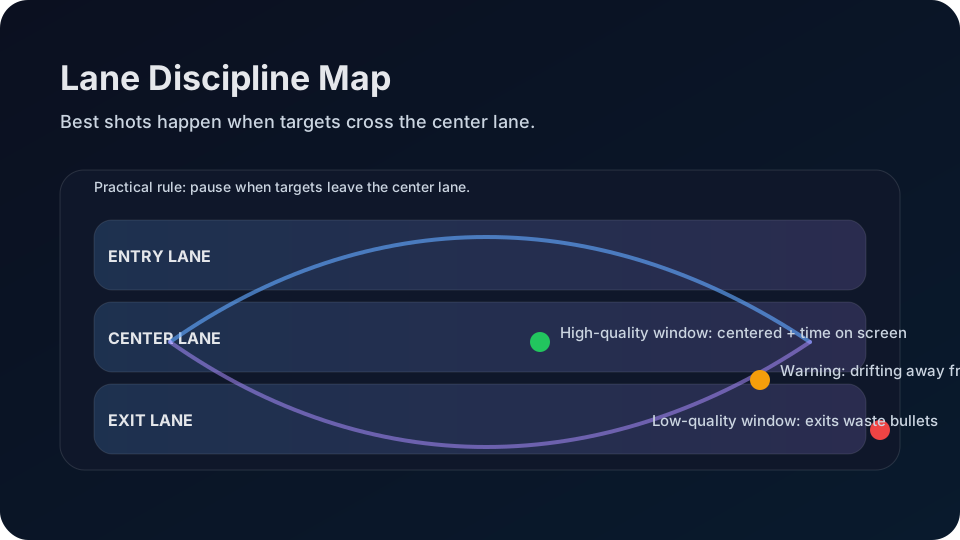
Lane discipline means you shoot targets when they have time on screen. In most fishing shooters, targets enter from edges, travel across, and exit. When targets are exiting, you have less time for bullets to connect. This reduces efficiency and increases cost per capture.
Many players underestimate how big this effect is. If you shoot during exits, your hit-rate drops and you begin increasing cannon to “force” the catch. That is a classic feedback loop: lower efficiency leads to higher spending, which leads to tilt. Lane discipline breaks the loop.
Lane rule
If a target is leaving the center lane, stop firing. Wait for a centered window. Pausing is not weakness; it is the correct play.
Targets and symbols: a practical band system
Paradise is themed as a lively underwater hunt. You’ll typically see a mix of small fish, mid-value creatures, and premium targets. Instead of trying to memorize every creature as a “symbol”, classify them by what they do to your budget. Your budget is determined by cannon level and pace. Your risk rises sharply when you commit high cannon to premium targets without a cap.
Band 1 — Farm targets
Examples: Small fish, slow swimmers, easy targets
Risk: Low. Best for learning and stabilizing pace.
How to play it: Use base cannon. Shoot only on center crossings. Fire in short bursts. Rotate quickly. The goal is calm, repeatable play.
Band 2 — Value targets
Examples: Medium creatures, groups, targets that linger
Risk: Medium. Can become expensive if chased too long.
How to play it: Attempt only when the target has time on screen. Set a cap. If you step up cannon, do it for a timer window and step down immediately.
Band 3 — Treasure targets
Examples: Chests, treasure-themed targets, special glowing targets
Risk: High. Designed to trigger tunnel vision.
How to play it: Treat treasure as a short project: strict cap, center lane only, exit at cap or when the target drifts toward an exit lane.
Band 4 — Boss targets
Examples: Large predators, elite bosses, event-style targets
Risk: Very high. High burn rate and high variance.
How to play it: Use boss windows: define time/cap, define cannon, focus only the boss during the window, and exit cleanly at cap.
A simple guideline: when you feel tempted, lower your cannon. Temptation is not a strategy signal; it is a risk signal.
Treasure: how to chase chests without tunnel vision
Treasure targets are designed to create tunnel vision. A chest or glowing target appears and your brain immediately says: “This is the moment.” The danger is that “moment” thinking removes all guardrails. You raise cannon, hold auto fire, and ignore lane quality.
The systematic Paradise approach is the opposite: treasure attempts should be shorter than normal play. If you want to treat treasure as entertainment, you do it as a short project. You set a strict cap, you only shoot in center-lane windows, and you exit cleanly. Then you return to farming and let the next opportunity come.
Two-question filter
Before you shoot a treasure target: (1) Is it centered? (2) Do I already know my cap? If either answer is no, wait.
Boss strategy: the boss window method
Boss targets create the biggest swings in many fishing games. They are exciting and they often look like “the correct thing to shoot”, which is why they can destroy sessions. The problem is not the boss itself. The problem is chasing a boss indefinitely.
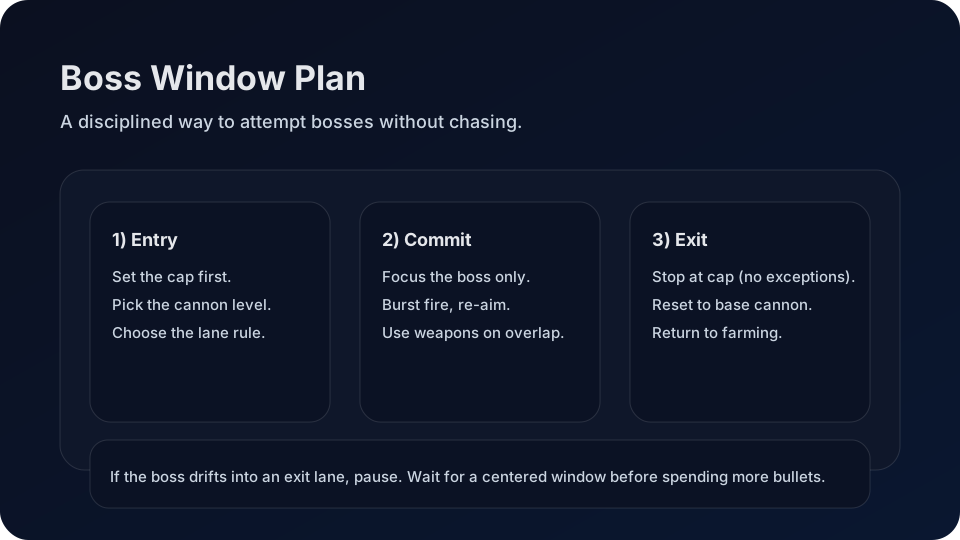
The boss window method turns a chaotic chase into a controlled attempt. You define three things before you start: a cap (time or bullets), a cannon level, and a lane rule (for example: only shoot while centered). Then you commit only during the window. When the window ends, you exit—no matter how close it feels. That exit is what keeps your session stable.
Boss rules
Rule 1: enter with a cap. Rule 2: focus the boss only. Rule 3: exit at cap. If you cannot follow Rule 3, you should not step up cannon.
Tips and tricks you can actually follow
The best Paradise tips are habits, not hacks. If a tip requires perfect instinct or constant attention, it will fail during a real session. The tips below are built around simple triggers: lane position, caps, and pace.
Build a base cannon identity
Your base cannon is the level you can hold calmly. If you keep raising it because you feel impatient, you will compress variance and spend too fast.
Treat pace like a second bet size
Cannon level is your bet per bullet, but pace is bullets per minute. Two players with the same cannon can spend completely differently.
Shoot the center lane, pause on exits
When targets are exiting, bullets are more likely to miss or land too late. Pausing is a skill and it saves money.
Use caps as your default language
Decide your cap before a chase. Caps protect you from emotional extensions. The game’s job is to tempt you; your job is to exit.
Use weapons for overlap
Weapons are best when they can affect more than one outcome: multiple targets stacked, clustered waves, or a premium target surrounded by farm targets.
Practice discipline in short sessions
If you want to improve, play shorter sessions that end cleanly. Long sessions often drift into autopilot.
Reset after any big emotional moment
After a big win or a big miss, step down to base cannon and farm for a minute. This stops the chase reflex.
If you break rules twice, stop
A simple safety valve: if you ignore your cap twice, end the session. This prevents spirals.
One more practical trick: say your cap out loud before you start a chase. It sounds silly, but it forces clarity.
Session templates (copy and play)
Templates are how you stop drifting. Pick one template, follow it exactly, and judge the session by discipline rather than by payout. When you consistently end sessions cleanly, the game becomes much more enjoyable.
Beginner control session
Duration
15–20 minutes
Goal
Learn lanes + caps
Base cannon only. Shoot farm targets on center crossings. Use a short cap per target (time or bullets). Avoid treasure and bosses. Win condition: control.
Treasure guardrail session
Duration
20–30 minutes
Goal
Practice treasure attempts safely
Farm normally, then take 2–3 treasure attempts only when centered. Tight caps. No chasing into exit lanes. Reset to farming after each attempt.
Boss window micro-session
Duration
10–15 minutes
Goal
Boss discipline
Warm up first. Schedule one boss window (short, timed). Focus the boss only. Exit at cap even if it feels close. Reset to base cannon.
Low-drama entertainment session
Duration
30–45 minutes
Goal
Stay steady and enjoy
Never exceed base cannon. Rotate targets. Prefer clear lanes over rare targets. Use weapons only when multiple targets overlap.
Bankroll: the invisible skill in Paradise
In Paradise, bankroll management is not optional. The game is fast, and you can spend your entire budget quickly if you combine high cannon and high pace. Bankroll control is the skill that keeps sessions long enough for good opportunities to appear.
Use a simple structure: pick a session budget, pick a session timer, and pick a base cannon. If you want to chase bosses or treasure, allocate a small portion of the budget to those attempts. When that allocation is used, you stop attempting premium targets. This keeps “one more try” from turning into a full session spiral.
A calm rule
If your cannon level makes you nervous, it is too high. Lower it and let the session breathe.
Mistakes that cost money (and how to fix them)
Spraying bullets on empty screens
When the screen is empty or targets are exiting, auto fire wastes money. Pause and wait for a better window.
Raising cannon to recover losses
This is a tilt pattern. If you feel the urge, step down, farm, or end the session.
Locking targets without a cap
Locking increases emotional commitment. Decide the cap first, then lock if needed.
Treasure tunnel vision
Treasure is a short project: cap, center-lane only, exit. Long treasure chases are bankroll leaks.
Boss chasing
Use boss windows. Exit at cap. If you cannot exit, do not attempt bosses at high cannon.
No timer
Without a timer, most sessions end after a chase. Timers create clean endings.
If you want the one-line fix for most mistakes: slow down. Slower pace gives you time to re-aim, notice exits, and remember your cap.
Play demo vs play real
Demo mode is ideal for building habits: lane discipline, burst fire, and clean exits. If a third-party demo widget is available for Paradise, we can embed it here (similar to other fishing guides). At the moment, our build environment cannot reliably access SlotCatalog pages due to Cloudflare restrictions, so this section is structured and ready for a later demo embed update.
Demo checklist
Practice these three things in demo first: (1) stop firing on exits, (2) set a cap before every chase, (3) return to base cannon after premium attempts.
Video
If you want a specific Paradise gameplay video embedded here, share the exact embeddable URL (for example a YouTube link), and we’ll add it without guessing. For now, this guide focuses on the repeatable mechanics and decision-making that apply to Paradise-style fishing shooters.
FAQs
What kind of game is Paradise on 6 Club?
Paradise is an arcade fishing shooter (fish shooting game). You aim at moving targets and spend per bullet, then get rewards when targets are captured.
Is Paradise skill-based?
Your decisions affect efficiency (aim, timing, target selection, pace), but outcomes still involve randomness and game mechanics. Think of it as interactive real-money gaming entertainment, not a guaranteed skill game.
What is the best cannon level for beginners?
Start at a low, calm base cannon and only step up briefly when you have a clear plan. If you feel pressured, lower the cannon immediately.
How do I avoid overspending?
Use three guardrails: a session timer, a base cannon level, and a cap per target. If you ignore your cap twice, stop the session.
How should I approach treasure chests?
Treat treasure attempts as short, capped projects. Shoot only when centered, use burst fire, and exit at cap or when the target drifts toward an exit lane.
How do I play bosses without chasing?
Use boss windows: define a short window, define cannon level, define cap. Focus the boss only during that window, then exit cleanly.
Is there a demo version available?
Some fishing games have embedded demos via third-party widgets. If a demo is available for Paradise, this page will be updated to embed it. For now, use the in-game lobby or play responsibly with a small base cannon.
Images and visuals
These visuals are hosted locally in your project’s public folder. They include the Paradise thumbnail and original SVG diagrams created specifically for this tutorial.


Ready to play Paradise?
Keep it simple: base cannon, center-lane shots, strict caps, and clean exits. Paradise is most enjoyable when you treat premium targets as short windows rather than endless chases.