Fishing • One Shot Fishing
One Shot Fishing: complete how-to guide for CQ9Gaming’s portrait fishing shooter
One Shot Fishing is a mobile-first fishing shooter where your bullets are your bets. It feels simple—aim and shoot—yet the real skill is discipline: picking the right room, keeping a stable turret, and using bullet caps so you don’t chase one target forever. This guide walks you through the game step-by-step and gives repeatable tips you can actually follow.
Depth note: this page is intentionally written at 3000+ words to rank for searches like “One Shot Fishing how to play”, “One Shot Fishing tips and tricks”, “One Shot Fishing Dragon Balls”, “Shen-Long boss strategy”, and “One Shot Fishing demo”.
What makes it special
Portrait rooms + objective play
Dragon Balls → Shen-Long (optional).
Foundation
Room choice
Match your comfort.
Control
Bullet caps
Rotate targets.
Efficiency
Center lane
More on-screen time.
Exit
Timer
Stop on schedule.

Overview: what One Shot Fishing is (and how to play it well)
One Shot Fishing is not a reel slot. The game runs in real time: creatures swim across the screen and you fire bullets from your turret to capture them. When a target is captured, you receive a payout relative to your bet level. Because you control the firing pace, your decisions matter more than in many slot formats.
The simplest way to improve at One Shot Fishing is to turn the chaos into structure. Instead of “shoot everything”, you choose a base turret, you shoot in short bursts, and you avoid targets that are about to leave the screen. You also assign caps to each target category so you never spend indefinitely on a single chase.
This guide is intentionally practical and avoids promises. No strategy can guarantee a win in a wagering game. What you can do is build habits that reduce waste: better aim, better timing, better selection, and cleaner stop rules. Those habits make the experience more enjoyable and typically reduce the “I spent too fast” feeling.
Quick facts
Provider
CQ9Gaming
SlotCatalog lists One Shot Fishing as a CQ9Gaming title.
Release
2021-11-06
Release date is listed in the game attributes on SlotCatalog.
Type
Fishing shooter (portrait mode)
This is an arcade shooter: every bullet is a wager. It’s designed primarily for mobile portrait play.
Players
Up to 4
SlotCatalog describes rooms that can host multiple players at once.
RTP
96%
RTP is listed on SlotCatalog; real sessions can vary widely depending on decisions and variance.
Max win
Up to x500
SlotCatalog lists max win x500. In practice, the biggest moments are tied to boss and special targets.
Bet range
0.1–100
SlotCatalog lists min bet 0.1 and max bet 100 (currency equivalent).
Key feature
Turret upgrades
Higher rooms and higher wagers unlock stronger turrets; this can increase both upside and spend-rate.
Sources: RTP, release date, bet limits, and attribute labels are based on SlotCatalog’s game page for One Shot Fishing. This tutorial is original wording and focuses on play structure rather than copying review text.
How to start One Shot Fishing on 6 Club
If you want a smooth first experience, your goal is not to chase bosses. Your goal is to understand spending pace and to build the habit of deliberate bursts. Once that habit is in place, everything else becomes easier.
Open One Shot Fishing from Fishing
In 6 Club, go to Our Games → Fishing and choose One Shot Fishing. The Fishing gallery uses your local thumbnail (one shot fishing.webp) and routes to this guide at /our-games/fishing/one-shot-fishing.
Decide your base plan before the first shot
Fishing shooters are interactive, which means they can spend quickly if you shoot on instinct. Before you fire a single bullet, decide three rules: (1) a base turret/cannon level you will use most of the time, (2) a timer for the session, and (3) a bullet cap per target so you always have an exit door.
Start in the room that matches your comfort level
One Shot Fishing is organized into rooms (Newbie / Expert / Master). Rooms change the stake range and the feeling of risk. If you want to learn the game calmly, start in the lowest room and practice aiming, target selection, and discipline before moving up.
Warm up on stable targets
For the first few minutes, shoot easy on-screen targets that move through the center lane. The goal is not a big win; the goal is to calibrate your aim and learn how quickly your balance moves at your chosen base level.
Treat the boss as optional
The game has a narrative objective (Dragon Balls → summon Shen-Long). It’s fun, but it is also where players overspend. In your first sessions, practice farming steady targets and using bullet caps. Only attempt the boss when you can follow a strict plan.
A helpful beginner rule: if you are not sure what to shoot, pause for two seconds and watch the screen. Targets that stay visible and pass through the center are the safest choice.
Controls and UI: the few things that matter most
One Shot Fishing looks busy, but you don’t need to understand every effect. You need to understand the controls that affect cost, and the features that can quietly increase spend-rate.
Turret level = cost per bullet
In One Shot Fishing, the single biggest control is your turret/cannon level. It determines how much each bullet costs. If you keep a stable base turret and use short, planned step-ups, your session stays controllable. If you keep raising the turret after misses, the session becomes a spend spiral.
Aim lock (focus fire)
SlotCatalog notes an Aim feature that lets you target one creature and keep firing until it drops. This is useful for focus, but it can also create tunnel vision. Use aim lock with a cap: if the target isn’t paying within your cap, release and rotate.
Auto shoot (convenience with a risk)
Auto shoot saves effort, but it can hide your spend-rate. If you use auto, treat it like a timed tool: enable it for a short window, then turn it off and reassess the screen. Leaving it on by default is the fastest way to overspend.
Multiplayer overlap
Rooms can host multiple players, which makes the screen busy. The reliable approach is to pick a lane (left/middle/right), focus your aim on targets with good on-screen time, and avoid spraying into chaos where you can’t see what you’re paying for.
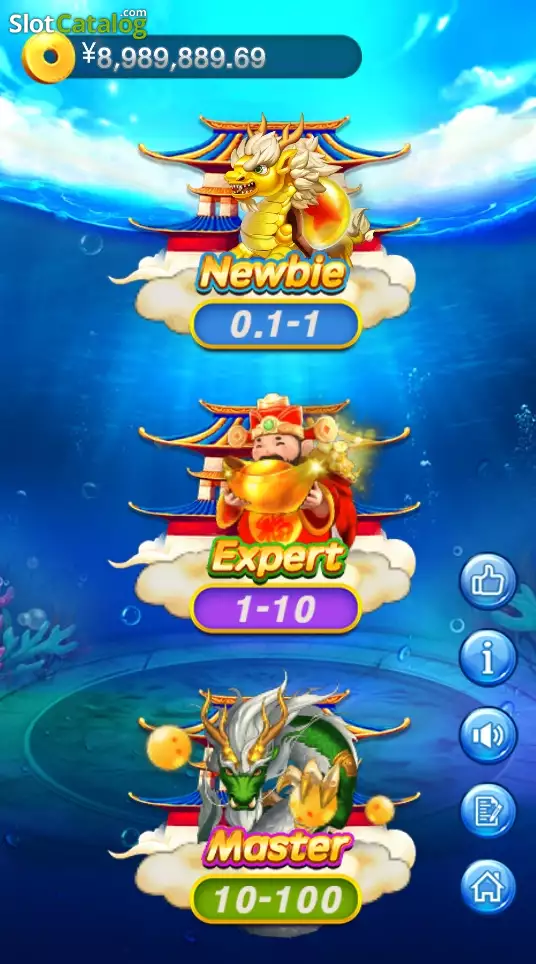
Rooms: Newbie vs Expert vs Master (how to choose)
SlotCatalog describes three rooms with different stake ranges. Think of rooms as risk presets. They don’t change your skill, but they change the consequences of every mistake.
Newbie room: learn the rhythm
Use Newbie to build habits: center-lane aiming, short bursts, and bullet caps. Treat it like practice even if you’re playing for real money. The goal is to get comfortable with the UI and with the feeling of ‘one bullet = one wager’.
Expert room: controlled aggression
Expert is where many players should stop and stay. You can do planned boss windows without the extreme spend of the highest room. The key is to keep the same discipline as Newbie: base turret for most shots, step up only for a reason.
Master room: high variance
Master is not ‘better’; it’s simply higher stakes. If you play Master without a strict stop-loss and bullet caps, the session can end quickly. Enter Master only when you’re calm, focused, and willing to stop on schedule.
Rooms ladder

The safest move is choosing the room where you can keep a stable turret and still feel relaxed.
Turrets: upgrades, power, and how not to overspend
SlotCatalog highlights turret upgrades as a core feature. Upgrades can make it easier to finish high-value targets, but they also raise the cost of your bullets and can increase the speed of spending. The goal is not “highest turret always”; the goal is “right turret for the moment”.
Base turret first, upgrades second
The base turret is your default because it keeps costs predictable. Upgrades should be rare and time-boxed. The best upgrades happen when the screen is dense (more targets) or when you have a clear objective (a boss window or a Dragon Ball carrier).
One step-up is enough
A common mistake is step-up stacking: raise turret, miss, raise again, miss again. Instead, decide ‘one step-up only’ for a short window, then return to base. This creates a simple rule you can actually follow.
Spend-rate is the hidden stat
In reel slots, the game controls pacing. In fishing shooters, you do. If your finger speed increases, your spending increases even at the same turret level. That’s why short bursts and deliberate pauses matter as much as the turret number.
Turret upgrades model
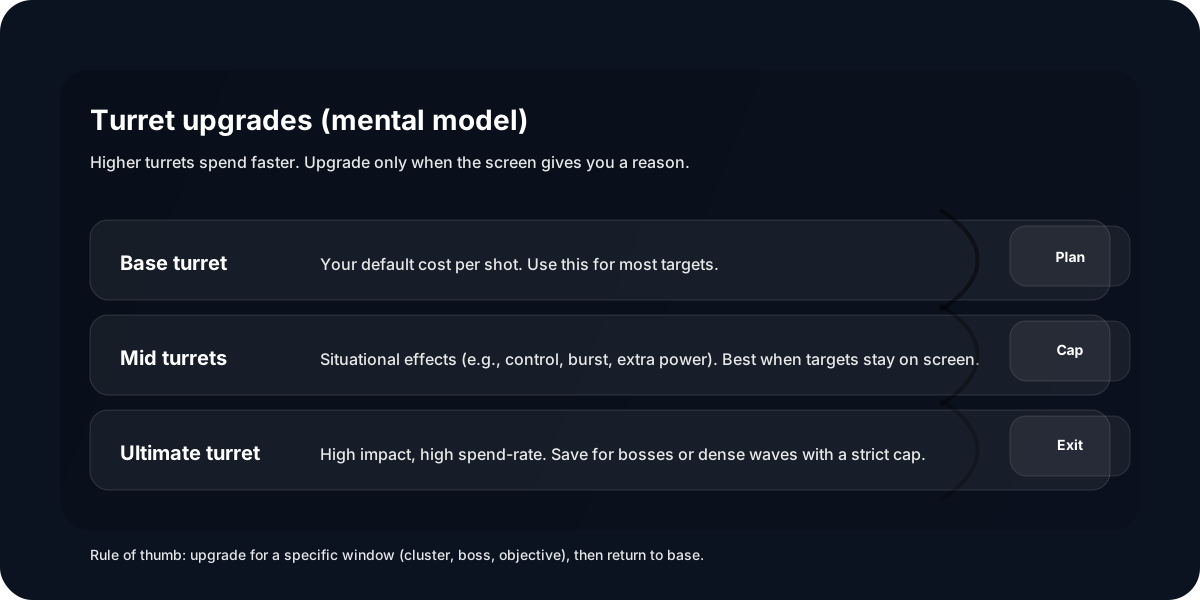
Plan the upgrade window, cap the attempt, and exit back to base. This pattern prevents tilt.
Aim and Auto Shoot: convenience without chaos
SlotCatalog notes that One Shot Fishing includes aim targeting and auto shoot. These features can help you focus, but they can also hide how fast you are spending. The safe approach is: use aim to reduce misses, and use auto only in short windows when the screen is dense.
Lead targets, don’t chase
Instead of aiming directly on the fish’s current position, aim slightly ahead of its path so it swims into your bullets. This reduces misses and makes each burst more efficient.
Center lane is your friend
Targets that pass through the center typically stay visible longer. Long visibility means more chances for a capture without ‘last-second panic shooting’. If a premium target is already exiting, skip it.
Auto shoot: use it like a timer
Auto shoot is best used in short windows (for example, 10–20 seconds) when a dense wave is on screen. Outside of dense waves, auto usually turns into wasted bullets. If you can’t describe why auto is on, turn it off.
Caps prevent tunnel vision
Aim lock and auto fire can cause tunnel vision. Bullet caps fix this. Pick a cap per target category and follow it. If the cap ends, you rotate, even if the target looks close.
Aiming efficiency
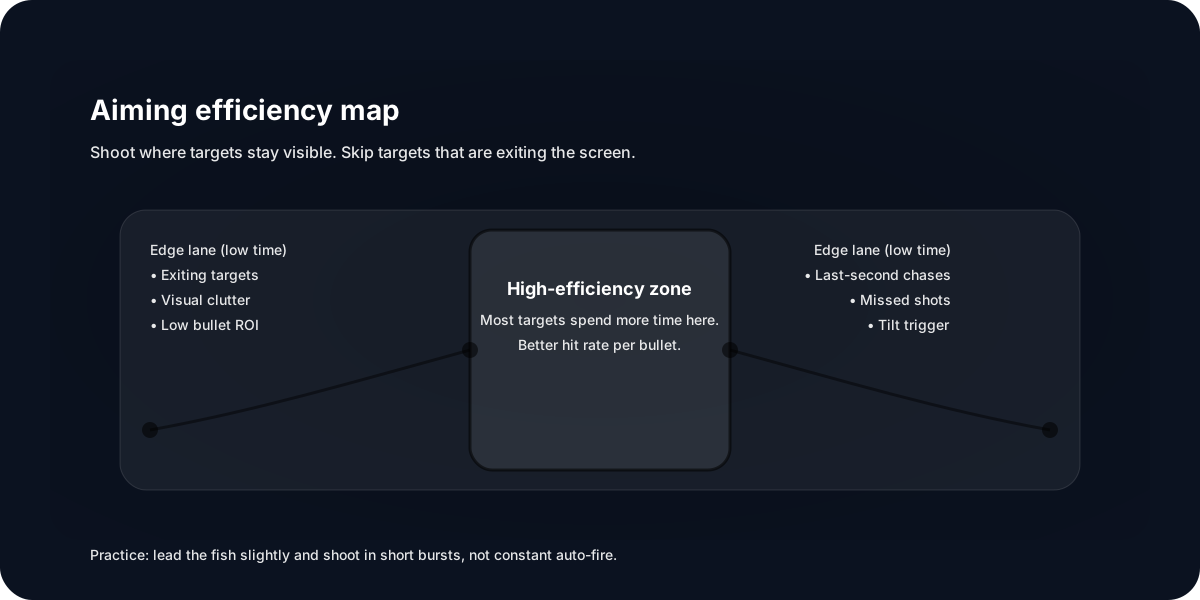
The center lane tends to offer more time. More time means fewer panic bullets.
Targets and “symbols”: what to shoot first
In a slot, symbols are fixed on reels. In One Shot Fishing, “symbols” are target categories: common fish, premium creatures, special characters, and boss moments. You don’t need to memorize every creature name to play well. You need a priority system.
Common fish (foundation)
Examples: basic fish and creatures that are easy to finish
Typical range: Low multipliers (often in the x2–x25 range)
How to play it: These targets are your bankroll stabilizers. Use them to keep the session calm, learn aim timing, and avoid rapid-fire panic. The goal is not maximum multiplier per kill; the goal is efficient hits per bullet.
Mid-value creatures (core value)
Examples: jellyfish / stingray / dolphin-style targets
Typical range: Mid multipliers (commonly around x30–x50)
How to play it: This tier is often the best balance of risk and reward. Use base turret, shoot center-lane targets, and cap bullets per target. If the screen is empty, wait; if it’s dense, consider a short step-up.
Premium hunters (swingy targets)
Examples: shark-style and other premium creatures
Typical range: Higher multipliers (for example x80–x100)
How to play it: Premium targets are exciting, but they can drain your balance if you chase. Attempt them only with a plan: a strict cap, a short time window, and ideally a dense screen so you don’t waste shots.
Special characters (objective carriers)
Examples: Fortune God-style and Dragon Ball carriers
Typical range: Wide ranges (for example x100–x300 depending on the target)
How to play it: Special characters can change the session because they tie into the Dragon Ball objective. Treat them as optional, planned attempts. If you miss the window, let it go—your session does not need to revolve around one spawn.
Boss tier (Shen-Long)
Examples: Shen-Long / Shen-Long Jr-style boss moments
Typical range: Highest single-win potential (up to around x500)
How to play it: Boss play should be time-boxed and budgeted. Decide in advance whether you will upgrade the turret for the attempt, and decide when you stop. A disciplined exit is more important than forcing a dramatic finish.
Practical priority for most sessions: (1) stable mid-value targets in the center, (2) premium targets only when you have a plan, (3) special characters only with a quest budget, (4) bosses only when you are ready to stop on schedule.
Dragon Balls: the objective loop explained
SlotCatalog describes a clear “quest loop” for One Shot Fishing: collect Dragon Balls, then summon the Shen-Long boss for a high-variance moment. It’s fun because it gives a purpose beyond random shooting. The risk is that objectives can create chasing behavior.
Treat Dragon Balls as a quest, not a guarantee
SlotCatalog describes an objective loop where you collect Dragon Balls and can summon the Shen-Long boss. The important mindset is that the quest is optional. You can have a good session without finishing the quest, and you can also lose money chasing it.
Use a ‘quest budget’
If you want to play the objective, assign it a budget. Example: ‘I will spend up to X bullets hunting Dragon Ball carriers today.’ When the budget ends, you either stop the session or return to stable targets. This stops the common trap where the objective becomes an endless chase.
Make the screen work for you
Objective attempts are best when the screen is dense. If the screen is empty, pause and wait. If the screen is crowded, you can fire controlled bursts and let splash effects or overlap increase efficiency.
Dragon Balls flow
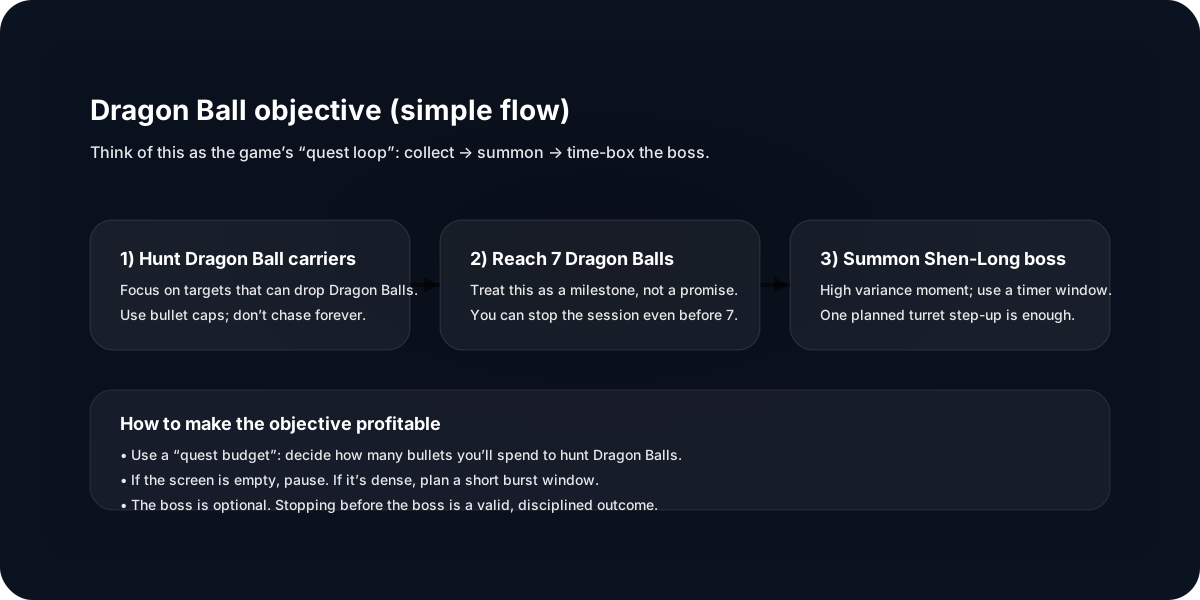
Treat the boss as optional. Discipline is what turns the quest into entertainment instead of overspending.
Shen-Long boss strategy (time-boxed and repeatable)
The Shen-Long boss is the dramatic peak of the objective loop. It’s also where players tend to lose discipline because the moment feels rare and important. The safest strategy is to turn the boss into a repeatable recipe: time-box, cap, exit.
Time-box the attempt
Pick a timer window (for example 45–90 seconds). When the timer ends, you stop shooting the boss and return to base play or end the session.
Pick a turret rule
Either stay at base turret or allow one planned upgrade. Do not upgrade repeatedly mid-attempt. Repeated step-ups are how boss moments turn into tilt.
Set a bullet cap
Bosses create the illusion of progress. A bullet cap keeps you honest. If you hit the cap, you stop, even if the boss looks close.
Exit cleanly
A clean exit is a skill. After your attempt, pause shooting for a few seconds, breathe, and decide what you do next. This prevents ‘one more burst’ reflexes.
A helpful mental trick: define success as “I followed my plan”, not “I killed the boss”. Following the plan is within your control; the outcome isn’t.
Tips and tricks (practical and repeatable)
Good play in One Shot Fishing looks calm. You spend most bullets at a base turret, you aim for targets with time on screen, and you avoid emotional step-ups. The tips below are designed for consistency.
Play portrait-first (mobile advantage)
One Shot Fishing is designed to feel natural in portrait mode. If you’re on desktop and it feels awkward, don’t force long sessions. Short sessions reduce frustration and wasted bullets.
Shoot in bursts, not forever
Burst shooting keeps your spend-rate visible. Fire a short burst, reassess the target and screen, then decide whether to continue or rotate. Constant firing hides costs.
Use a target-by-target cap system
Make caps different by tier: smaller cap for mid targets, larger cap for premium, strict cap for bosses. Caps prevent tunnel vision and keep your session stable.
Treat auto shoot as a tool
Auto is helpful when the screen is dense. Turn it on for a short timed window, then turn it off. Leaving auto on while waiting for spawns is pure leakage.
Don’t chase exiting targets
If a target is already leaving the screen, the odds of wasted bullets is high. Skip it. Your best targets are the ones that give you time to be efficient.
Rotate when the screen is chaotic
Multiplayer effects can obscure targets. When chaos rises, lower your turret and shoot only obvious center-lane targets. If you can’t see what you’re shooting, you’re not making a decision.
Boss attempts should be scheduled
Decide before you play whether you want to attempt the boss today. If yes, decide how many attempts (often one) and what your time window is. If no, you skip the boss and enjoy a calmer session.
Stop when you’re no longer playing your plan
The moment you notice yourself raising turret out of emotion, turning on auto without a reason, or chasing one target past your cap, that’s the best time to stop. Stopping is a strategy.
If you only adopt one idea: caps. Bullet caps solve chasing, and chasing is the most common reason fishing sessions feel like they “spiral”.
Session templates you can copy
Templates remove decision fatigue. Instead of debating what to do next, you follow a pre-chosen script. Choose a template that matches your goal and follow it exactly.
Newbie learning session (20–30 min)
Duration
20–30 minutes
Goal
Learn aim + UI with low stress
Stay in Newbie room. Base turret only. Use short bursts. Ignore the boss and objective. Cap bullets per target. End the session on time even if the screen looks exciting.
Balanced profit hunt (25–40 min)
Duration
25–40 minutes
Goal
Play mid-value targets efficiently
Start in Newbie or Expert depending on comfort. Focus mid-value targets in the center lane. Use one short step-up window when the screen is dense. Avoid long chases. If you attempt the objective, set a quest budget first.
Objective attempt (15–25 min)
Duration
15–25 minutes
Goal
Try Dragon Balls with discipline
Define a quest budget. Hunt carriers only when they are on-screen and the screen is not empty. If you reach the summon moment, time-box one boss attempt. Win or lose, end the session after the attempt.
Quick mobile break (10–15 min)
Duration
10–15 minutes
Goal
Play casually without tilt
Lowest comfortable room. Base turret only. No auto shoot. Only center-lane easy targets. End immediately if the interface feels laggy or frustrating.
Mistakes to avoid (fast fixes)
Many “bad luck” stories in fishing shooters are really spending stories. Fix the mistakes below and the game usually feels better immediately, even before results change.
Leaving auto shoot on by default
Auto shoot can be useful, but it’s also the easiest way to lose track of spending. If auto is on, it must be on for a reason and for a short time.
Chasing one premium target past the cap
This is the classic leak in fishing shooters. The fix is simple: choose a cap before you begin, and rotate the moment you hit it.
Raising the turret after misses
Misses happen. Raising turret to ‘make it back’ is tilt. Turret upgrades should be planned before the moment.
Shooting targets that are exiting
Edge-lane chases burn bullets with low chance of capture. Focus on targets with time on screen.
Turning the boss into the whole session
Boss moments are high variance. If you make them the entire session, variance dominates and discipline disappears. Keep boss attempts short.
Myths (beliefs that cost money)
‘If I keep shooting it, it must pay soon’
Truth: Fishing outcomes can be streaky. More bullets does not guarantee the next bullet finishes the target.
Fix: Use bullet caps and rotate. Caps keep decisions rational.
‘Auto shoot is always efficient’
Truth: Auto is only efficient when the screen is dense and you have a clear target plan.
Fix: Turn auto into a short timed tool, not a default mode.
‘Higher room means higher profit’
Truth: Higher room means higher stakes and higher variance, not guaranteed profit.
Fix: Pick the room where you can stay disciplined and play longer.
‘The Dragon Ball quest must be completed every session’
Truth: The quest is optional. Chasing it can be expensive.
Fix: Use a quest budget and treat the boss as optional.
One Shot Fishing is best enjoyed as entertainment with structure. Structure keeps the game fun.
Play demo vs play real
Demo play is the best way to practice aim, turret discipline, and bullet caps without pressure. Demo availability can vary by region and network. This page provides a demo link to SlotCatalog and a real-play link to 6 Club.
How to use demo practice correctly
Demo is not only about learning controls. The most valuable demo skill is discipline: set a timer, pick a base turret, and practice bullet caps until they feel automatic. If the SlotCatalog demo is not accessible in your region, you can still practice safely by playing the lowest room with the minimum comfortable turret.
Video
SlotCatalog hosts a “Video and Image gallery” section for One Shot Fishing. If you want to see more footage and screenshots beyond what we saved locally, open the SlotCatalog page and scroll to the gallery.
If you want us to embed a specific video directly on this page (for example a YouTube embed), share the exact embeddable URL and we can add it without guessing.
FAQs
Is One Shot Fishing a slot game?
No. It’s an arcade-style fishing shooter. You wager per bullet and win by capturing targets on-screen.
Who made One Shot Fishing?
SlotCatalog lists the provider as CQ9Gaming.
What is the RTP of One Shot Fishing?
SlotCatalog lists the RTP as 96%. RTP is a long-run theoretical number; your short sessions can vary a lot based on decisions, target selection, and turret discipline.
Can I play One Shot Fishing on mobile?
Yes. One Shot Fishing is designed for portrait play and generally feels best on mobile. If you play on desktop and it feels awkward, keep sessions short to avoid wasted bullets.
How do the rooms work (Newbie, Expert, Master)?
SlotCatalog describes three rooms with different stake ranges. A simple way to choose: use Newbie to learn, Expert for balanced play, and Master only when you can follow strict caps and stop rules.
What are Dragon Balls used for?
SlotCatalog describes an objective where collecting Dragon Balls can lead to summoning the Shen-Long boss. Treat it as a fun quest, but use a budget so it doesn’t turn into a chase.
How do I approach the Shen-Long boss safely?
Time-box the attempt, allow at most one planned turret step-up, and use a hard bullet cap. If the timer or cap ends, you stop. This turns boss play into a controlled strategy instead of a tilt trap.
Does One Shot Fishing have free spins or bonus rounds?
Fishing shooters don’t work like reel slots. Instead of free spins, the game uses target tiers, upgrades, and objective/boss moments as the main excitement points.
Is there a demo version?
SlotCatalog presents One Shot Fishing with a demo section, but demo availability can vary by region and network. This page provides a ‘Play Demo’ button linking to SlotCatalog; if the demo is unavailable, use Newbie room and minimum turret for safe practice.
What’s the biggest win possible?
SlotCatalog lists a maximum win of x500 for One Shot Fishing. In practice, the largest single-win moments are tied to high-value targets and boss events.
Images and visuals
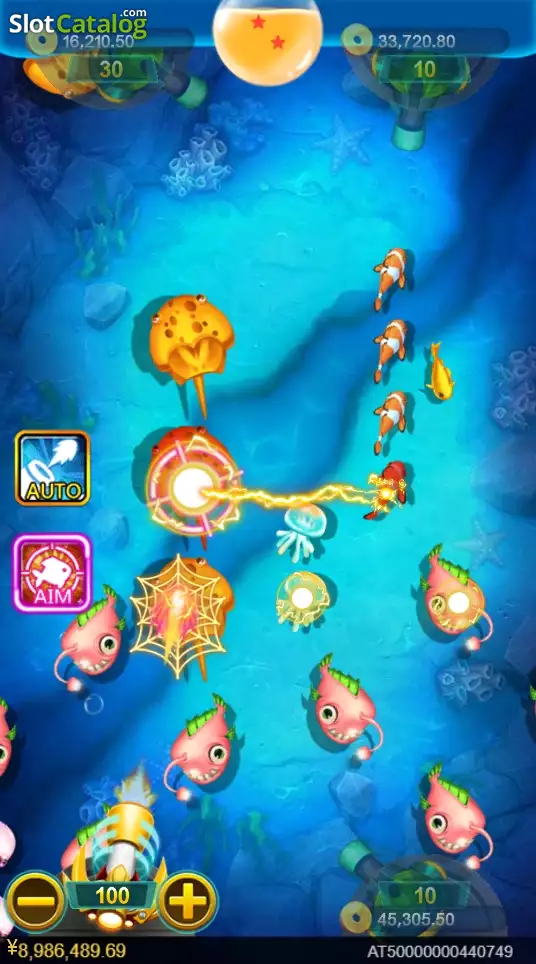
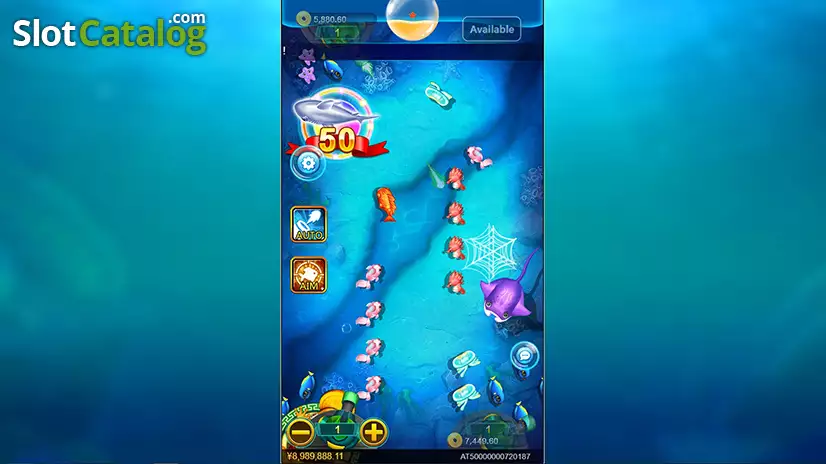
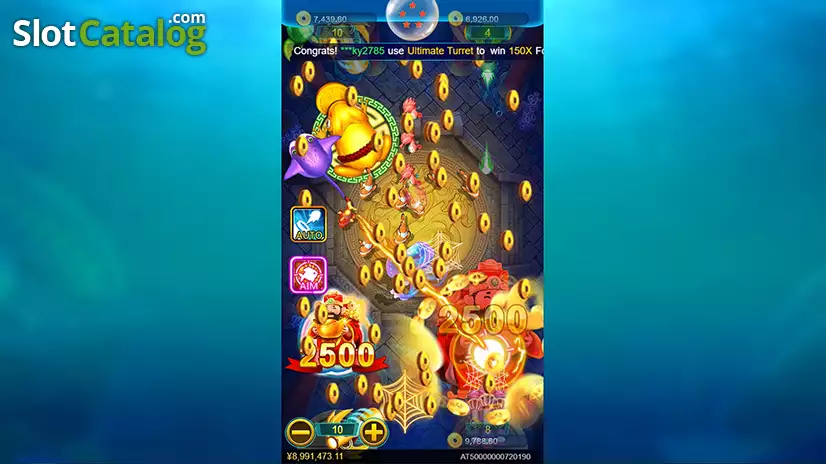
Below are original SVG diagrams made for this guide and selected screenshots from SlotCatalog’s gallery saved locally into the site’s public folder.


Ready to play?
If you want a calmer experience, start in the lowest room, keep a stable turret, and follow bullet caps. That one structure keeps One Shot Fishing fun.