Fishing • Hero Fishing
Hero Fishing: how to play, aim better, and stop wasting bullets
Hero Fishing is won by discipline, not by nonstop shooting. Every bullet costs money, so your job is to spend bullets only when targets are hittable (good angles), in the value lane (center), and during overlap windows where power-ups convert multiple captures. This guide is designed for 6 Club players and focuses on practical rules you can follow even when the game gets loud.
Fast-start path
New players: Getting Started → UI → Targets → Cannon Strategy → Lanes & Routes → Power-Ups. Experienced players: jump to Bosses & Events for budgeting rules.

Core rules
Lane • caps • missions
Win by wasting less.
Rule
Value lane
Center third only.
Rule
Miss cap
Pause after 3–5 misses.
Rule
Two cannons
Base + mission.
Rule
Mission script
Budget + timer.
SEO focus
Targets searches like “Hero Fishing guide”, “how to play Hero Fishing”, “Hero Fishing tips”, “Hero Fishing symbols”, and “Hero Fishing demo vs real”.
Table of contents
This guide is structured like a coaching plan: learn the UI, categorize targets, build lane discipline, then apply power-ups and mission budgeting to events.
About online screenshots (e.g., catalog pages): only use images you have rights to redistribute. This page uses original, locally hosted SVG visuals so the guide stays consistent and safe.
Overview: the Hero Fishing mindset
Game type
Fishing (aim-and-shoot)
Every bullet is a wager; captures pay back
Core skill
Efficiency
Spend fewer bullets for higher-quality angles
Best pattern
Lane discipline
Shoot center intersections, not border exits
Risk driver
Cannon escalation
Raising cannon to recover is the #1 leak
Power-up rule
Overlap first
Tools convert density; don’t use on scattered screens
Session rule
Budget + timer
Treat events as short missions, then exit
What Hero Fishing is
Hero Fishing is a fishing-style arcade game where you aim a cannon at moving targets and fire bullets that cost money. Capturing targets returns a payout based on the target’s category and the room rules. Unlike slots, there is no single spin outcome; you’re making continuous decisions about aim, target choice, shot volume, and when to stop.
Why it feels simple (and why that’s a trap)
Fishing games look straightforward: shoot and win. The trap is that you can keep firing endlessly, and small inefficiencies compound quickly. Border chasing, holding fire through bad angles, and pressing specials the moment they light up will drain a bankroll faster than most players expect.
Your winning objective
The objective is not ‘hit everything’. It’s to be selective: spend bullets only when targets are hittable long enough (good angles), in a high-value lane (center), and during overlap moments where power-ups convert multiple targets. This guide turns the game into a repeatable system: lane rules, caps, and mission budgeting.
The “hero” part of Hero Fishing should be your decision-making: you become the hero of your bankroll by refusing low-quality shots. If you play only when the angle is good and you stop on schedule, sessions become far more predictable.
Getting started (first sessions)
Your first sessions should feel slow and controlled. You’re building habits that keep you safe when events and bosses tempt you to overspend.
Step 1
Open Hero Fishing from Fishing
Go to Our Games → Fishing and select Hero Fishing. This guide page lives at /our-games/fishing/hero-fishing to match the Fishing gallery routing.
Step 2
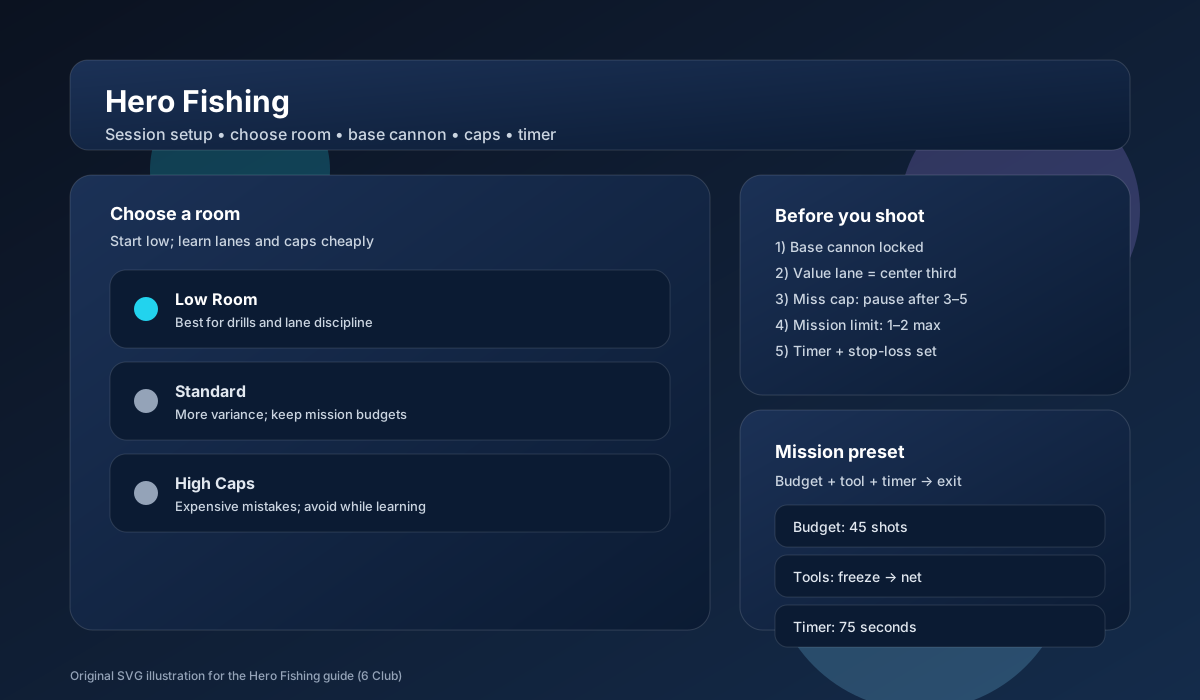
Pick the lowest comfortable room
Fishing rooms typically change cannon caps or cost scaling. Start low: it makes learning cheap, and it forces accuracy. You can always step up later once your habits are solid.
Step 3
Set a session budget (before shooting)
Decide how much you can spend today and treat it as fixed. A simple starting structure: a 25–40 minute session, a stop-loss at 15–20% of your planned budget, and a hard stop when the timer ends.
Step 4
Lock a base cannon
Choose a base cannon level you can sustain calmly. Most of your bullets should be at this level. If you feel rushed or emotionally reactive, drop cannon and reset.
Step 5
Adopt a value lane
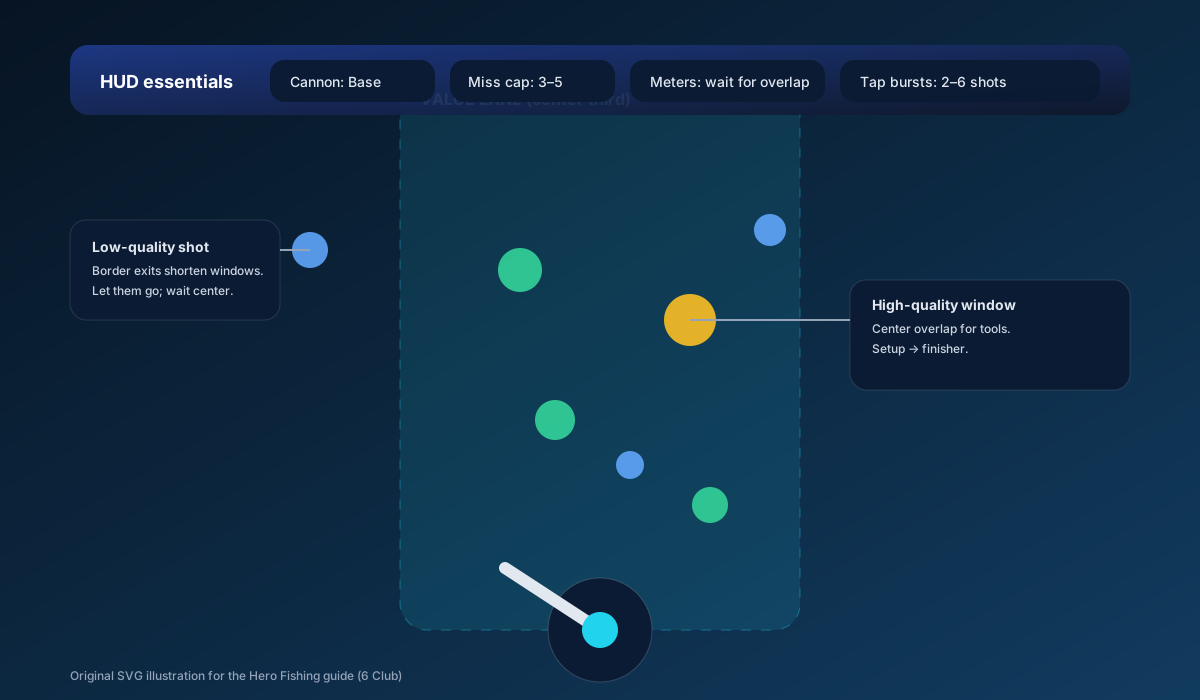
Treat the center third of the screen as your value lane. Targets that pass through the center stay hittable longer, and multiple routes intersect there—perfect for repeatable clean shots.
Step 6
Use caps, not feelings
Before you engage a target, decide a shot cap: the maximum bullets you’ll spend. Caps prevent the most expensive habit in fishing games: “just a few more shots”.
If you feel the urge to “make something happen,” that’s your signal to pause. Waiting for a good center-lane window is not passive—it’s the main skill.
UI & controls: the only things that matter
Most interface elements are visual noise. Your decisions depend on a small set of signals: cannon cost, target position, density, meters, and your caps.
Cannon level (your stake per bullet)
Cannon level is your cost per shot. It’s also the multiplier on mistakes. A high cannon with sloppy aim burns budget fast. A lower cannon with strict lane discipline often lasts longer and creates more chances to find high-quality overlap windows.
Tap bursts vs holding fire
Holding fire feels efficient, but it keeps spending even after the angle becomes bad. Tap bursts (2–6 bullets) create micro-pauses that let you re-aim, stop chasing, and switch targets when a route turns exit-bound.
Meters and special buttons
Meters are permissions, not obligations. A full meter means you may use a power-up if the screen provides overlap. The best players wait: they bank the meter until targets compress in the value lane, then they spend the meter to convert multiple captures.
Room rules and pacing
Rooms can affect how quickly targets spawn, how aggressive bosses feel, and how expensive step-ups become. Your strategy adapts by changing two things only: your base cannon and your mission budgets.
A simple filter: if an interface element does not change what you shoot or when you stop, it should not influence your decisions.
Targets and symbols: think in categories
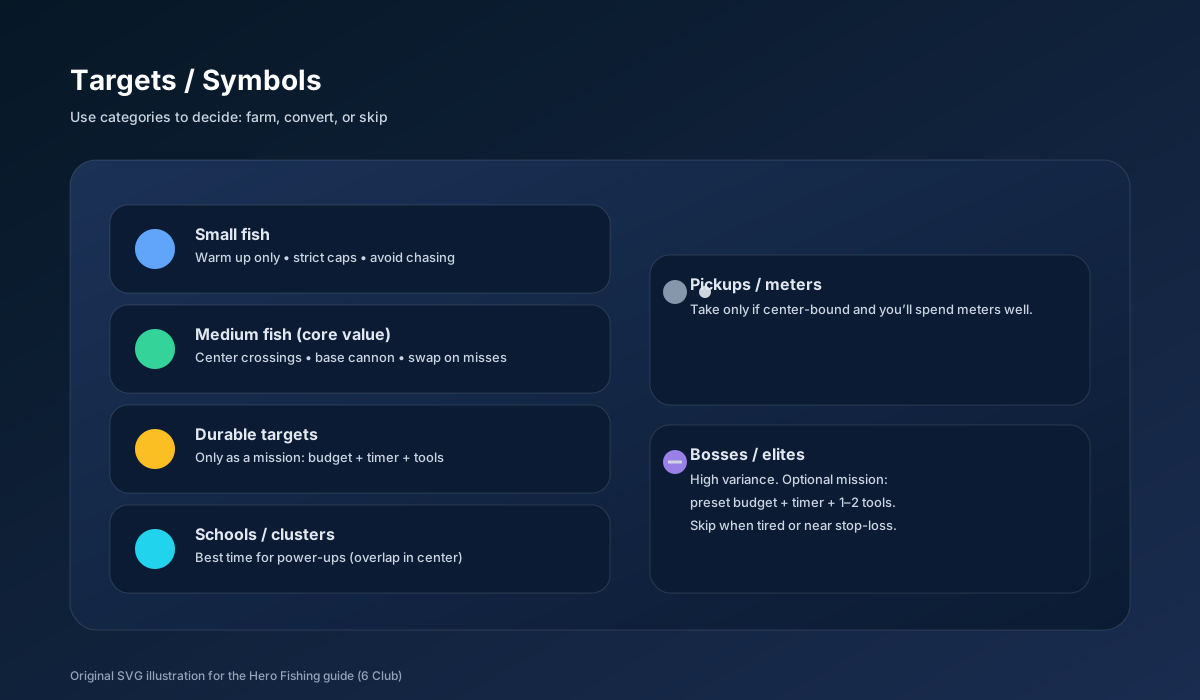
Different versions of fishing games can rename targets or change artwork. The category logic stays the same. Categorize first, then decide whether it’s worth a mission.
| Symbol type | What it means | Best approach | Avoid when |
|---|---|---|---|
| Small fish (fodder) | Fast, low-value targets that encourage constant firing. | Use as warm-up; short bursts; strict caps; stop if they pull you to borders. | When you’re developing a spray habit or feeling rushed. |
| Medium fish (core value) | Balanced targets that usually produce the steadiest sessions. | Prioritize center crossings; base cannon; switch targets after miss streaks. | When they turn exit-bound and you’d chase. |
| Durable targets (high HP) | Targets designed to absorb bullets and increase variance. | Engage only with a plan: budget + timer + 1–2 tools during overlap. | Near stop-loss, late in session, or emotionally invested. |
| Schools / clusters | Overlapping targets—highest potential for efficient power-ups. | Wait for center compression; then setup → finisher sequence. | When the ‘cluster’ is stretched or on borders. |
| Pickups / meter carriers | Targets that build meters, enable bonuses, or drop items (variant dependent). | Shoot only if center-bound and you plan to spend meters intelligently. | When you’re collecting meter with no plan and wasting it later. |
| Bosses / elites | High variance targets that tempt big cannon play. | Treat as an optional mission: fixed shot cap + timer + 1–2 tools. | When you’re chasing losses or you can’t exit cleanly. |
Your stable foundation is medium targets in the value lane. Then add school conversions with power-ups. Bosses come last, and only as optional, budgeted missions.
Cannon strategy: scale responsibly
Cannon changes should follow opportunity, not emotion. Keep it simple: two cannon levels and strict mission budgeting.
Base cannon (70–85% of shots)
A stable base cannon keeps mistakes cheap and allows you to stay calm. The majority of bullets should be at your base cannon. The goal is to be able to play for several minutes without feeling pressure.
Comfort step-up (one notch)
Step up only for clear overlap windows: a compressed school in the center, or a durable target that stays in lane long enough for a planned mission. Step down immediately when the window ends.
Mission cannon (burst-only)
If you choose to fight bosses, treat it as a burst mission: decide a shot count (e.g., 20–50) and execute. Bursts prevent the common leak of continuing “until it dies”.
Anti-tilt rule
Never raise cannon to recover losses. Recovery cannon is the fastest path to spiraling variance. If you want to chase, pause, lower cannon, and reset on a calm center-lane medium target.
If you want a simple safety rule: if your breathing changes or you feel urgency, step down. A calm base cannon is a competitive advantage in fishing games.
Lanes & routes: where the value lives
Most players lose by chasing targets outside the value lane. Lane discipline turns the game into a predictable loop: wait for center crossings, burst, and stop.
The value lane concept
Your value lane is the center third of the screen. It’s where routes overlap, where targets remain visible longer, and where your cannon can cover multiple trajectories without huge aim swings. Shots outside the value lane are not forbidden, but they should be rare and intentional.
Route recognition beats reaction
Fishing games reward players who recognize routes. Instead of chasing a target after it spawns, learn where it enters, where it intersects the center, and where it exits. Pre-aim intersections and shoot when the target is approaching, not after it has already passed.
Intersections are your best shots
An intersection is any area where multiple targets cross paths. Intersections create repeated, predictable opportunities: if your bursts miss, you can stop and wait for the next pass rather than continuing to spray.
Exit-bound targets are low quality
When a target is moving toward the border and will leave soon, your time-on-target is short. Short time-on-target means you must either hold fire (wasteful) or chase (wasteful). The disciplined move is to let it go and wait for a center crossing.
When you feel bored while waiting for a good lane window, you’re doing it right. Boredom is often the sign of discipline.
Aiming & angles: the mechanical edge
Good aim is not about being fast. It’s about being accurate and stopping quickly when the angle becomes bad.
Lead the target
Bullets travel. Aim slightly ahead of moving targets so the bullet meets the target’s path. Start with medium fish crossing the center lane and adjust your lead until hits feel consistent.
Burst, re-aim, burst
Aiming is easier when you shoot in bursts. After a burst, re-aim based on the target’s next position. This rhythm stops the spray habit and improves accuracy.
Use a miss cap
After 3–5 consecutive misses, stop firing. Miss caps are a skill: they cut off waste early and keep your decisions rational.
Shoot intersections, not corners
Intersections in the center lane give longer windows and repeated opportunities. Corners and borders shorten windows and force chasing.
Pre-aim entry points
Many routes repeat. Instead of chasing, aim where targets enter or where they pass through the center. Pre-aiming saves bullets and reduces frantic mouse/finger movement.
Reset your posture
If you miss repeatedly, the problem is usually not “bad luck”; it’s angle or timing. Take a short pause, lower cannon, and restart on a clean medium target crossing the center.
The fastest aim upgrade: stop shooting sooner. Accuracy improves when your shots are intentional and limited.
Power-ups: setup → finisher
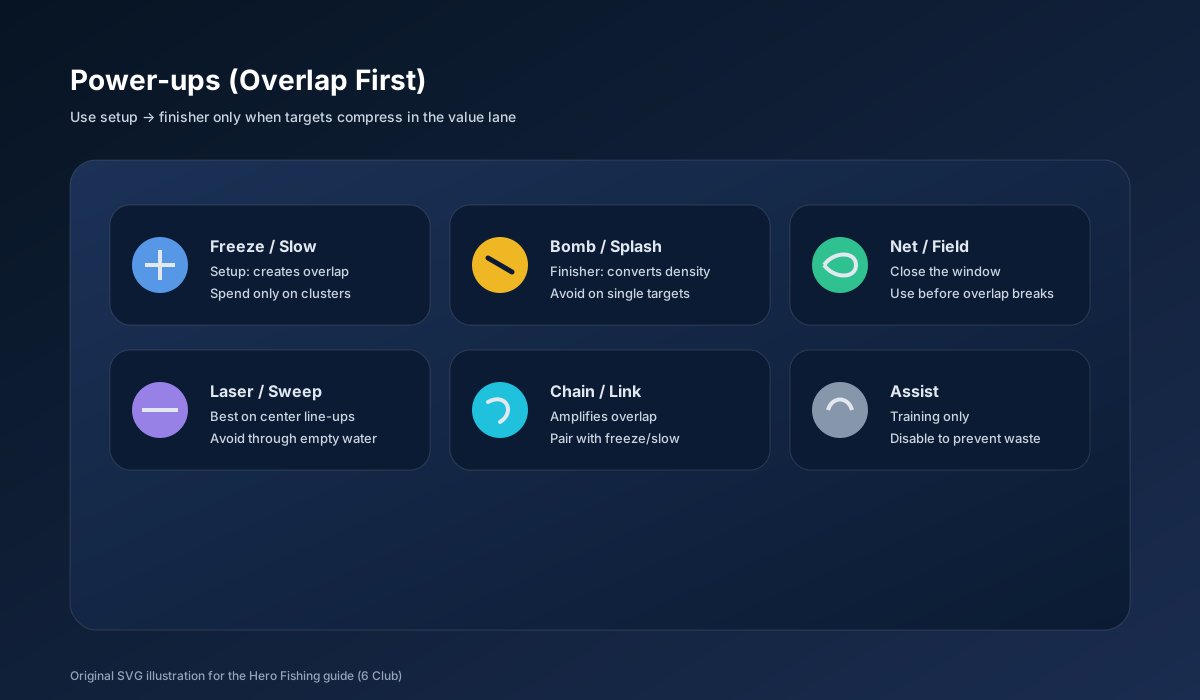
Power-ups are premium. Use them only when the screen provides overlap in the value lane. If targets are scattered, wait.
Freeze / slow (setup tool)
Freeze is a setup tool. Its job is to create overlap and predictable targets. Use it when a school compresses in the value lane, then immediately follow with a finisher.
Bomb / splash (converter)
Bombs convert density. They’re most efficient when multiple targets overlap. Bombing a single scattered target is usually a waste.
Net / capture field (close the window)
Nets are for closing a window: use after a bomb to secure survivors, or just before a frozen cluster spreads out.
Laser / sweep (lane-based finisher)
Lasers are strongest when targets line up through the center. If your laser cuts through empty water, you spent a premium tool on low value.
Chain / link (density amplifier)
Chain effects reward overlap. Pair them with freeze/slow so targets stay close long enough to convert.
Assist tools (training only)
Assist can help you learn bullet speed and leading aim, but it can also overspend. Use it briefly for training, then disable it so you remain deliberate.
Default sequence to memorize: freeze/slow → bomb → net. If you don’t have overlap, don’t press anything.
Bosses & events: missions, not rescues
Bosses and events can be enjoyable, but they are also where your bankroll can disappear quickly. Mission rules keep them under control.
Bosses are optional high variance
Bosses can pay well, but they also burn budgets quickly. Treat bosses as optional missions. Your session should never depend on a boss to “save” you.
The boss mission script
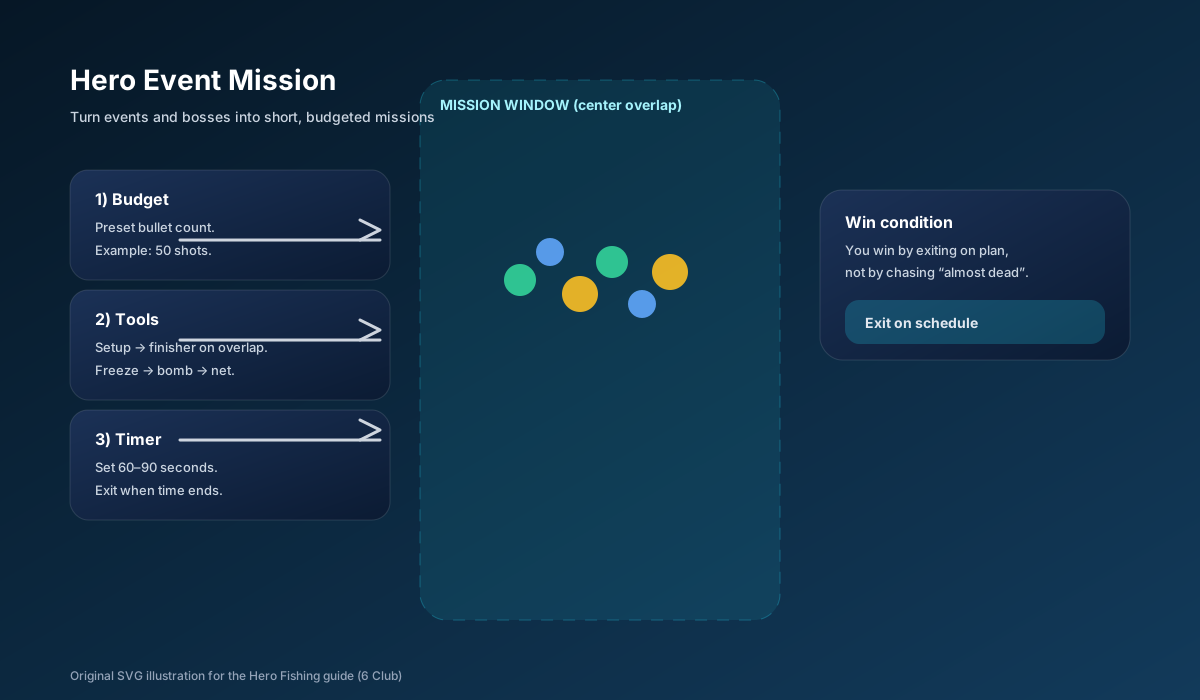
Before shooting a boss, decide: (1) budget in bullets, (2) a timer (60–90 seconds), and (3) which one or two tools you will use. If the boss is not center-bound, wait. If the budget ends, stop—regardless of how close the boss looks.
Event selection rule
Engage events only when they create overlap in the value lane. Loud effects do not equal good value. If the event drags you to borders, skip.
Skip conditions
Skip bosses/events when near stop-loss, late in session, distracted, or emotionally reactive. Skipping protects your bankroll and improves long-term consistency.
Strong sessions usually come from steady medium farming and one clean conversion mission. If your session relies on a boss, you’re playing high variance.
Variance & payouts: keep behavior stable
Variance is unavoidable. What you control is your behavior when variance hits. Structure keeps you consistent.
Streaks happen even with good play
Fishing games can be streaky. You might spend a planned budget and see fewer captures than expected. That’s variance. The point of structure is to prevent variance from changing your behavior.
Expected value mindset
A bullet is worth firing only when the target remains hittable long enough and your accuracy is high. Center-lane medium targets often outperform edge chases and random boss fights.
Waste is the real enemy
The most common loss pattern is not ‘bad luck’; it’s wasted bullets: chasing borders, shooting empty water, holding fire through bad angles, and using tools with no overlap. Reduce waste and sessions stabilize.
If you ever feel “owed” a win, stop. Feeling owed is the start of chasing.
Practice drills: build the habits
You improve faster by drilling one skill at a time than by playing longer sessions. Use drills to train lane discipline, leading aim, and clean mission exits.
One-minute observation start
Begin each session with 60 seconds of no shooting. Identify center crossings and intersections. This single habit improves decisions immediately.
30-shot value lane drill
Fire exactly 30 base-cannon shots only inside the value lane. If a target leaves the lane, stop. This trains discipline.
Miss-cap practice
Intentionally pause after 3 consecutive misses. The goal is making the pause automatic, not optional.
Setup → finisher rehearsal
Wait for a cluster in the center. Use freeze/slow (setup) then bomb or net (finisher). Repeat until it feels like one action.
Boss mission exit
Attempt one boss mission with a strict timer. Your success metric is exiting on schedule, not killing the boss.
Two-minute reset
If you break lane rules twice, take a two-minute pause (no shooting). Return only when calm.
Choose one drill per session for a week. Then rotate drills. The goal is making discipline automatic.
Bankroll plans you can follow
The best bankroll plan is simple and enforceable. Pick a plan and stick to it for multiple sessions.
Beginner plan
- Lowest room available.
- Base cannon for 80%+ of shots.
- One small step-up only on overlap.
- Stop-loss: 15–20% of planned budget.
- One boss or event mission max.
- End the session on timer.
Steady builder plan
- Session length: 30–40 minutes with one break.
- Two planned missions max (event/boss).
- Fixed shot caps for every target category.
- After a mission, pause 10–20 seconds.
- If you feel rushed, drop cannon immediately.
Focused improvement plan
- Pick one focus: leading aim, miss caps, or mission exits.
- Limit to two cannon levels (base + mission).
- Track one metric: wasted border shots.
- Stop early when attention drops.
- Review weekly and adjust caps.
Consistency beats excitement. If a plan feels restrictive, it’s doing its job.
Playbooks: what to do in real sessions
Playbooks reduce improvisation and prevent overspending when the screen gets busy.
Core farming (recommended)
For stable sessions built on medium targets.
- Base cannon, short bursts.
- Medium targets crossing the center lane.
- Switch targets after miss streaks.
- Use one tool only on real overlap.
- End on timer.
School conversion
For repeated center-lane clusters.
- Wait for center compression.
- Comfort cannon only during overlap.
- Freeze/slow → bomb → net.
- Exit when the cluster spreads.
- Reset to base after.
Boss attempt (optional)
For boss play without chasing.
- Preset shot budget + timer.
- Shoot only when boss is center-bound.
- Use 1–2 tools max.
- Stop on budget (even if close).
- If emotions rise, end session.
Anti-tilt reset
Use after you catch yourself chasing.
- Drop to base cannon.
- Pause 20 seconds.
- Take one calm center medium target.
- If chase repeats, end the session.
If you’re unsure, use Core farming and add one mission at most.
Common mistakes (and how to fix them)
Fixing these leaks often improves results immediately.
Border chasing
Exits are low time-on-target. The fix is letting targets go and waiting for the next center crossing.
Holding fire through bad angles
Holding fire keeps spending even after the window ends. The fix is bursts and re-aiming.
Raising cannon after losses
This is the main tilt pattern. The fix is pausing, lowering cannon, and using strict budgets.
Power-ups on scattered screens
Tools convert overlap. Using them on scattered targets usually wastes them.
Stacking missions
Back-to-back boss/event attempts stack variance. Limit missions per session.
Chasing a ‘near kill’
Targets often look close to dying. The fix is committing to your shot cap and exiting cleanly.
Hero Fishing tips and tricks
Practical tips that reduce waste and keep sessions stable.
Two cannons only
Use base cannon and one mission cannon. Extra levels invite emotional wandering.
Pre-decide caps per category
Have default caps: small (10–20), medium (20–40), durable (planned mission only). Adjust as you learn.
Pause after every power-up
After any special, pause for 5–10 seconds. It breaks momentum and prevents accidental overspending.
Track your waste, not your wins
You can’t control streaks, but you can control waste. Track border shots and random specials; reduce those first.
Short sessions beat long sessions
Fatigue makes aim worse and chasing more likely. End early if you lose focus.
Treat silence as strategy
Waiting is a skill. If the screen is scattered, wait for the next overlap window.
High-value trick: treat every tool use as a mini reset. After a power-up, stop firing briefly and reassess. That pause prevents the common “tool → spray” pattern.
Myths that break bankrolls
Replace myths with rules you can follow under pressure.
If I keep shooting, it must eventually pay
Truth: More shots without good angles often means more waste.
Fix: Shoot only in the value lane with caps and bursts.
Bosses are the best value
Truth: Bosses are high variance and can burn budgets quickly.
Fix: Treat bosses as optional missions with strict exits.
Power-ups should be used instantly
Truth: Instant use often wastes tools on low density.
Fix: Wait for overlap, then setup → finisher.
Raising cannon recovers losses
Truth: Recovery cannon increases variance and accelerates losses.
Fix: Pause, drop cannon, reset on one calm target.
Play demo vs play real
If your platform provides a Hero Fishing demo, it’s ideal for learning bullet speed, leading aim, and mission exits without pressure. If no demo exists, you can still practice effectively: choose the lowest stakes and follow the same discipline rules.
If you want to embed an official demo directly on the page, you’ll need a licensed demo URL from the provider/operator. Once you have that URL, I can add a safe embed.
Safe switching checklist
- Use the same caps in demo and real play.
- Start real sessions at the lowest base cannon.
- Limit boss/event missions per session.
- Exit on budgets even when it feels close.
Hero Fishing FAQs
Is Hero Fishing available on 6 Club?
Hero Fishing appears under Our Games → Fishing on this site. Availability can vary by device/platform, but this page provides a complete tutorial and the route matches the Fishing gallery.
Is Hero Fishing skill-based or luck-based?
It’s both. Skill affects aim, timing, target selection, and power-up efficiency. Luck affects capture outcomes. Strong structure makes results more stable over time.
What’s the best cannon for beginners?
Use a low base cannon you can sustain comfortably. Step up only for clear overlap windows and step down immediately afterward.
How do I know when to use power-ups?
Use them when multiple targets overlap in the center lane. A reliable sequence is freeze/slow (setup) then bomb/net/laser (finisher).
Does Hero Fishing have a demo mode?
Demo availability depends on the operator/platform. If a demo exists, use it for drills. If not, practice at minimum stakes using the same caps and mission rules.
What’s the fastest way to lose in fishing games?
Border chasing, holding fire, raising cannon to recover, and using specials on scattered screens. Replace those with lane discipline, bursts, strict caps, and planned missions.
Images and video references
These visuals are locally hosted SVGs designed for this guide: session setup, HUD/value lane, an event mission diagram, a power-up grid, target category sheet, and a video thumbnail concept.
Play Hero Fishing with a plan
The best Hero Fishing sessions look calm: base cannon, center-lane targets, strict caps, and one planned conversion mission. If you stay disciplined, you’ll spend less and give yourself more chances to hit the right windows.
One-minute checklist
- Base cannon locked.
- Value lane: center third only.
- Miss cap: pause after 3–5 misses.
- Power-ups only on clusters.
- Missions: budget + timer.