Fishing • Fishing Disco
Fishing Disco: a rhythm-first fishing guide for smarter shots
At 6 Club, Fishing Disco is an aim-and-shoot fishing game where every bullet is a wager. The fastest improvements come from structure: a base cannon, a value lane (center third), rhythm bursts instead of spraying, and power-ups only on real overlap. This guide is a deep, 3000+ word tutorial with tips, FAQs, and original SVG visuals.
SEO note: this page targets queries like “Fishing Disco guide”, “how to play Fishing Disco”, “Fishing Disco tips and tricks”, and “Fishing Disco demo vs real”.
Disco rules
Lane, beats, budgets
Turn fast waves into calm decisions.
Rule
Value lane
Center third only.
Rule
Three beats
Observe → engage → exit.
Rule
Two cannons
Base + event.
Rule
Overlap trigger
Specials on clusters.
What you’ll learn (and how to use this guide)
If you’re new, read in order: Getting Started → UI → Symbols → Cannon Strategy → Rhythm & Waves → Power-Ups. If you already know fishing basics, jump to Events & Specials for the budgeting script that protects bankroll when the screen gets flashy.
Important: we do not copy text or images from third-party sites. The visuals below are original SVGs created for this tutorial.
Overview: the Fishing Disco mindset
Game type
Fishing (aim-and-shoot)
Each shot is a wager; captures pay back
Theme
Disco / rhythm
Waves feel musical; clusters arrive in beats
Core edge
Timing
Wait for beat-like overlaps; avoid frantic spraying
Best habit
Shot caps
Budget per target and per special window
Power-up rule
Density first
Use specials only when multiple targets overlap
Demo
Varies
If no true demo exists, use minimum stakes + strict caps
What Fishing Disco is
Fishing Disco is a fishing-style arcade game: you steer a cannon, aim at moving targets, and spend bullets to try to capture them. When a capture lands, you receive a payout based on the target’s value (and sometimes on moment-to-moment events). The ‘disco’ theme usually means brighter effects and rhythm-like waves, but the underlying skill is the same as every fishing game: choose good shots and stop spending when shots stop being good.
Why it feels different
Fishing Disco often feels faster than classic fishing screens because the waves can come in tight bursts. The danger is psychological: fast waves make players think they must shoot constantly. In reality, your best sessions are the calm ones where you only shoot the center lane, you use short bursts, and you treat specials as planned windows rather than emergencies.
What this guide teaches
This is a deep 3000+ word tutorial built for 6 Club players who want structure: HUD basics, target categories, a disciplined cannon plan, rhythm-and-wave timing, power-up sequencing, bankroll rules, drills for fast improvement, common mistakes, myths, FAQs, and a set of locally hosted SVG visuals that explain the concepts without relying on third-party screenshots.
The strongest Fishing Disco sessions come from one boring skill: avoiding wasted bullets. If you follow the lane rule and the three-beat rhythm, your play becomes calmer, your aim improves, and your spending stays intentional.
Getting started (first sessions)
Fishing Disco rewards patience. Your first goal is not a ‘big hit’—it’s building a repeatable routine that prevents spraying. Use these steps as a script for your first 3–5 sessions.
Step 1
Open Fishing Disco from Fishing
Go to Our Games → Fishing and select Fishing Disco. The tile uses a local thumbnail (fishing disco.webp). This page exists under the slug /our-games/fishing/fishing-disco so the route matches the gallery.
Step 2
Start with the lowest comfortable stakes
Disco visuals can tempt ‘big cannon’ play. Resist it. Pick a base cannon you can fire calmly for 25–40 minutes. If you feel anxious watching your balance, the cannon is too high.
Step 3
Set two limits before the first shot
Choose a time limit and a stop-loss. Fishing games punish endless sessions because fatigue leads to chasing. A clean exit is part of the strategy.
Step 4
Choose a value lane
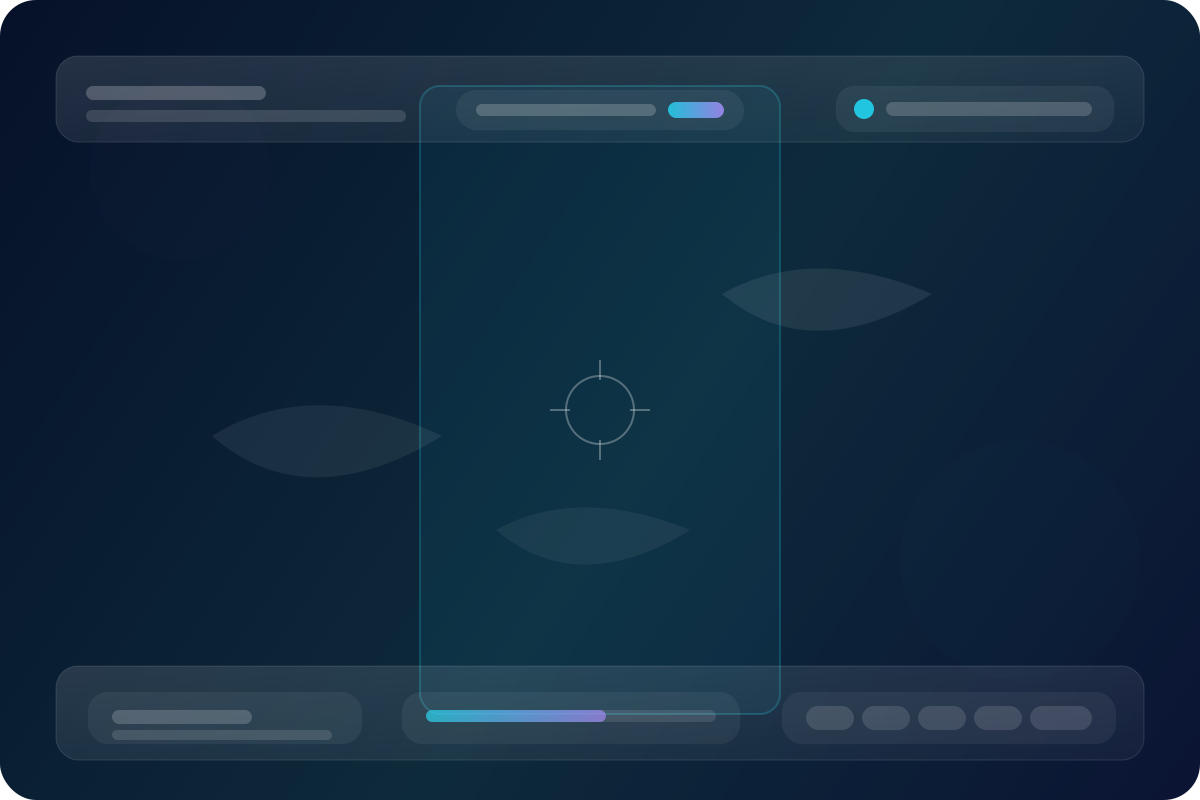
Treat the middle third of the screen as your value lane. Targets that cross the center give you more clean chances per bullet. Border shots are usually low accuracy and low time-on-target.
Step 5
Practice rhythm bursts
For your first sessions, don’t hold the trigger. Use tap bursts of 2–6 shots, then re-aim. This creates a ‘rhythm’ that matches wave timing and keeps your bullets intentional.
Step 6
Save specials for overlap
In disco-themed builds, specials and meters can flash a lot. Treat meters as permission, not instructions. Use tools only when multiple targets overlap in your value lane.
After a few structured sessions, the chaos becomes readable. You’ll start seeing wave entries and center intersections before they happen. That’s when Fishing Disco starts to feel ‘easy’.
UI & controls: make the HUD work for you
Disco visuals can be loud, but your decision layer is small: cannon level, value lane, meters, and caps. If you focus on those four things, everything else becomes background.
Cannon level (stake per bullet)
Cannon level determines how much each bullet costs. Bigger cannon does not create skill; it only makes mistakes expensive. In Fishing Disco, the goal is to keep base cannon stable and use short step-ups only when the screen offers dense, center-bound overlap.
Auto-fire vs tap rhythm
Auto-fire can be useful for learning bullet travel time, but it also fires through bad angles. Tap rhythm (short bursts) keeps you in control: you adjust aim between bursts and you stop spending when the lane becomes low-quality.
Meters, skills, and ‘ready’ alerts
A full meter means you may use a tool. It does not mean you should. The correct habit is: wait for overlap → press setup (freeze/slow) → press finisher (bomb/net/laser) → step down and reset.
Wave cadence
Disco builds often feel like they spawn targets in beat-like waves: a burst enters, crosses the middle, and exits. When you start seeing the cadence, you can pre-aim entry intersections instead of chasing after targets appear.
Practical focus hack: if you catch yourself watching particles and neon effects, you’re likely not aiming. Bring attention back to the center lane and your burst rhythm.
Symbols (targets): how to read value fast
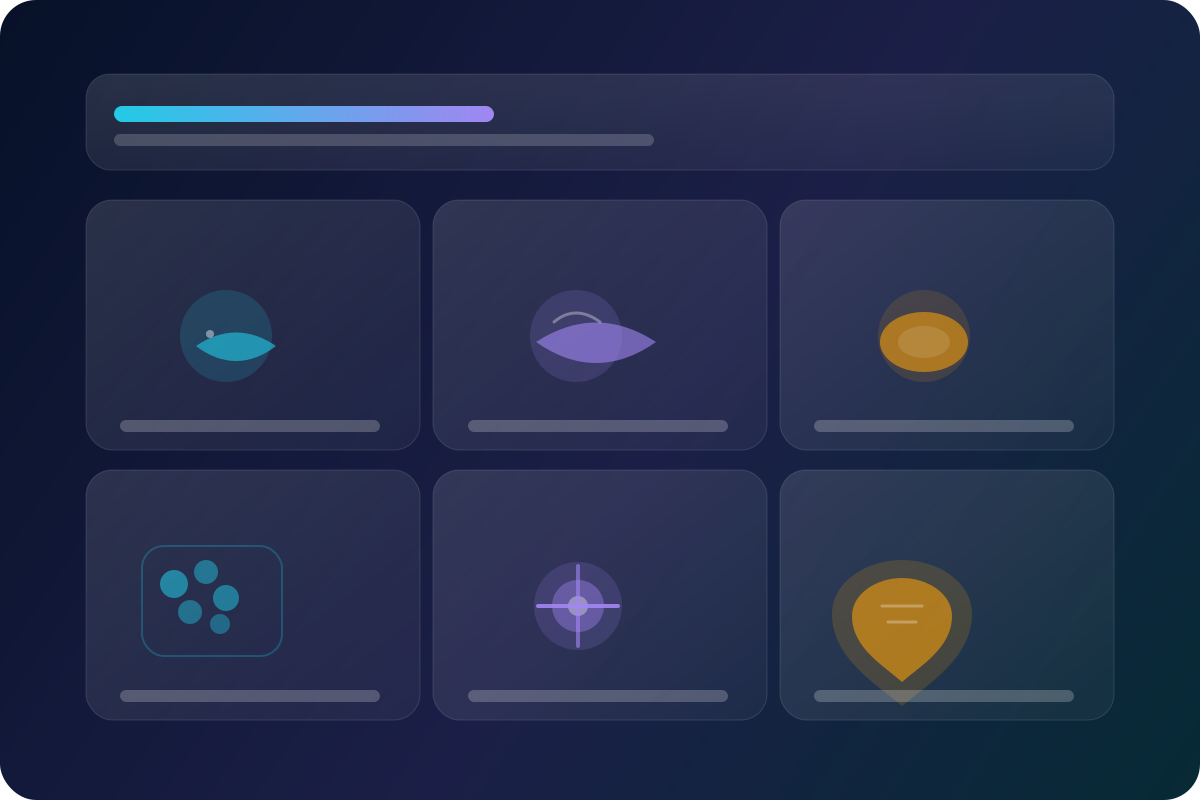
Fishing Disco builds may use different creature names across platforms. The categories below still apply: small/minion, medium/core, tanky/armored, clusters, meter carriers, and bosses. Learn categories and your decisions become quick.
| Symbol type | What it means | Best approach | Avoid when |
|---|---|---|---|
| Small targets (sparkles / dancers) | Fast, low-value targets used to fill the screen and test your discipline. | Use as aim warm-up in the value lane; small bursts; stop after a short cap. | When they drag you to corners or when you start spraying continuously. |
| Medium targets (core groove) | Balanced targets that often deliver the best steady risk-to-reward. | Prioritize center crossings; keep base cannon; switch targets if misses stack. | When the route is exit-bound and you’d need to chase. |
| Tanky targets (spotlight units) | Durable targets that absorb bullets and create variance spikes. | Engage only with a strict shot cap or with a setup tool ready (freeze/net). | When you’re down, tired, or emotionally tempted to ‘finish it’. |
| Schools / dance-floor clusters | Multiple targets overlapping—best moment for area tools. | Wait for true overlap in the center; use setup → finisher sequencing. | When the cluster looks big but is stretched and not overlapping. |
| Meter carriers (disco orbs) | Targets that build your specials or trigger mini-effects (variant dependent). | Shoot only if they are center-bound and you intend to spend that meter well. | When you’re not planning to use the meter—don’t farm meter accidentally. |
| Boss / headline act | High-variance targets designed to tempt bigger cannon play. | Treat as a scripted window: fixed budget + timer + 1–2 power-ups. | Late in session, near stop-loss, or when focus is low. |
Simple priority: mediums keep sessions stable, clusters are where specials belong, and bosses are optional scripted windows.
Cannon strategy: scale safely, not emotionally
Cannon management is where players win or lose the long session. Your cannon should change because the screen offers dense overlap—not because you feel urgency or frustration.
Base cannon (your default)
Base cannon is where you live. In Fishing Disco, your goal is to stay on base cannon for roughly 70–85% of bullets. Base cannon is not ‘weak’; it’s the level that keeps decision-making calm. If you can’t stay calm, you can’t aim, and if you can’t aim, the cannon doesn’t matter.
Comfort step-up (one notch)
A comfort step-up is a single notch above base used only for clean overlap: a tight cluster in the center, a slowed/tethered tanky target, or a straight lane where your accuracy is high. The most important action is stepping back down immediately after the window ends.
Event cannon (burst-only)
If you enjoy going bigger during a special ‘disco moment’ or boss, treat it as a burst with a fixed shot count. Example: 25 shots, then step down. The burst rule turns emotional spikes into planned windows.
Anti-tilt rule
Never raise cannon to recover losses. In fishing games, ‘recovery cannon’ is how sessions blow up. If you feel the urge to chase, pause shooting for 10–20 seconds, return to base cannon, and reset with one medium target in the center.
Heuristic: if you can’t fire your current cannon for five minutes without checking balance, it’s too high. Drop until you feel calm again.
Rhythm & waves: the Disco advantage
Fishing Disco rewards players who treat spawns as waves. When you play wave-to-wave, you stop wasting bullets in the exit phase and you concentrate spending in the center phase.
Why rhythm matters
Fishing Disco is easiest when you treat the screen like waves rather than individual fish. Most targets enter together, cross together, and exit together. That means you can plan: when a wave enters, you observe; when it crosses center, you spend; when it exits, you stop and reset.
The three-beat cycle
Use a simple cycle: Beat 1 (observe): no shooting for a second while you classify targets. Beat 2 (engage): short bursts at center-bound mediums or clusters. Beat 3 (exit): stop shooting as targets approach borders. This cycle prevents the most common leak—spraying into exits.
Rhythm burst sizing
Keep bursts small: 2–6 shots on mediums, 6–12 shots on tight clusters (base cannon), and only larger bursts when a setup tool (freeze/slow) creates guaranteed density. If you’re firing so long that you can’t re-aim, the burst is too big.
Reset moments
After any special tool, take a short reset (5–10 seconds) with minimal shooting. Special effects often scatter survivors and create messy angles. Resetting prevents you from wasting bullets during the ‘afterglow’.
The ‘disco’ secret is not a hidden feature; it’s a mindset: you don’t have to shoot every beat. You choose the beats that are profitable.
Aiming & angles: accuracy without stress
Good aim in Fishing Disco is mostly prediction. Lead targets slightly, aim at intersections, and stop shooting when angles become messy. Rhythm bursts create time to re-aim.
Lead targets (aim ahead)
Bullets travel. If you aim directly at a moving target, you’ll often shoot behind it. Aim slightly ahead of the path, especially on diagonal routes. Practice leading on medium targets that cross the center steadily.
Shoot intersections, not chases
Your best shots happen where routes intersect in the center. Your worst shots happen when you chase a target toward the border. In disco builds, chasing feels extra tempting because visuals are exciting—ignore the excitement and follow the intersection rule.
Use a miss cap
After 3–5 consecutive misses, pause firing, re-aim, and pick a calmer target. Miss caps stop the spray spiral before it becomes expensive.
Tap rhythm beats holding fire
Holding fire makes you feel busy, but it also makes you miss quietly. Tap rhythm forces micro-decisions: you evaluate, adjust, and stop when the lane becomes bad.
Pre-aim wave entries
Once you notice repeating entry points, aim where targets will arrive rather than chasing after they appear. This improves accuracy and reduces frantic camera movement.
If your aim feels off, don’t fix it with bigger cannon. Fix it with slower rhythm, cleaner targets, and a stricter lane rule.
Power-ups: sequence beats panic
Power-ups are not lottery buttons. They’re tools that become efficient only when the screen offers density. The best default approach is setup → finisher: freeze/slow or chain creates overlap, then bomb/net/laser converts overlap into captures.
Freeze / slow
Freeze is the best setup tool because it turns motion into predictability. Use it right before a tight cluster crosses the value lane, then follow with a finisher tool. Freezing scattered targets is usually waste.
Bomb / splash
Bombs convert overlap into captures. They work best when multiple targets overlap in the center. Bombing a single tanky target is often inefficient unless it is surrounded by adds.
Net / capture field
Nets are strong closers. Use after a bomb to collect survivors, or when a frozen cluster is about to drift apart. Timing matters more than cannon size.
Laser / lane sweep
Lasers are lane tools. Use them when targets line up through the center or when a durable target occupies the lane with smaller targets passing through. If the screen is scattered, hold the laser.
Chain / link effects
Chain effects reward density. Pair chain with freeze/slow to compress targets into a tight pack, then finish with bomb/net. Treat chain as a multiplier, not a rescue.
Auto-aim / assist
Assist can help beginners learn bullet speed and routes, but it can overspend if left on. Use it briefly for training, then return to manual rhythm.
Waste-prevention rule: don’t press a premium tool unless at least three targets overlap in your value lane.
Events & specials: budget the neon
Special moments are designed to raise your heart rate. Your edge is treating them as short windows with fixed budgets. Budgeting protects you from the ‘one more burst’ trap.
What ‘special windows’ really are
A special window is any moment where the screen changes: a bright disco burst, a bonus wave, a boss entrance, or a meter-triggered mini-event. Your job is to classify it fast: does it create overlap in the value lane? If yes, engage with a budget. If no, ignore it.
Boss windows: the budgeting script
If a headline-act boss appears, use a script: choose a total shot budget, choose one setup tool and one finisher tool, and set a timer (60–90 seconds). If the boss survives your budget, stop anyway. Budgeting is what prevents tilt.
Cluster-first rule during flashy moments
Don’t raise cannon just because effects are loud. First check the lane: are targets overlapping in the center? If yes, a short step-up can be justified. If no, keep base cannon and wait. Visual intensity is not value.
When to skip specials
Skip special windows when you’re near stop-loss, late in your session, distracted, or already made a few rushed decisions. Skipping is discipline, not fear.
A disciplined special window can still be fun. The difference is you leave on schedule. That’s how you keep the session enjoyable.
Variance & payouts: the correct mindset
Fishing Disco can swing quickly. That’s normal. Your job is to keep decisions stable through hot and cold streaks. Structure beats emotion.
Why outcomes swing
Fishing Disco can feel streaky: you might hit a cluster and feel unstoppable, then miss a durable target and feel stuck. That’s variance. The correct response is structure—shot caps, lane rules, and time limits—not cannon escalation.
Expected value (EV) thinking
You don’t need exact capture odds to play smart. Think EV: a bullet is worth firing only if the target will remain hittable long enough and your accuracy is high. Center-bound mediums often beat edge-bound bosses on EV.
Your real edge is wasted-bullet control
Most players lose in fishing games because of wasted bullets: chasing exits, shooting empty water, or firing at targets they can’t track. If you remove waste, sessions become steadier without any secret tricks.
The best ‘strategy’ is reducing waste: fewer border shots, fewer panic power-ups, and fewer emotional cannon jumps.
Practice drills (fast improvement)
Drills remove randomness from learning. Instead of reacting to whatever spawns, you practice specific skills: wave reading, rhythm bursts, leading aim, and power-up timing.
60-second observation start
Start sessions with one minute of no shooting. Watch wave entries and center crossings. This habit prevents instant spray and improves your target selection.
30-shot value lane drill
Fire exactly 30 base-cannon shots only at medium targets in the center. No border shots. If you break the rule, reset. This drill builds the habit that protects bankroll.
Beat-cycle practice
Practice the three-beat cycle for five minutes: observe → engage (short bursts) → exit (stop). The goal is to feel comfortable not shooting during the exit beat.
Power-up timing rehearsal
Commit to using freeze/slow only when a tight cluster overlaps in the center, then finish with one tool (bomb or net). Doing this intentionally teaches timing and prevents random button pressing.
Boss budget rehearsal
Even if you don’t fight bosses, rehearse the hardest skill: stopping. Choose a pretend boss budget (shots + one power-up), then stop exactly on budget. The ability to stop on schedule is what separates disciplined players from tilters.
Recommendation: pick one drill per session for a week. You’ll improve faster than if you just ‘play’ and hope skill appears.
Bankroll plans you can follow
Bankroll planning is not optional. Because fishing outcomes vary, you need rules that keep you stable when the screen is hot and when it’s cold.
Beginner plan (learning-first)
- Lowest room or lowest comfortable stakes.
- Base cannon for 80%+ of shots.
- One comfort step-up only on true center overlap.
- Stop-loss: 15–20% of planned budget.
- One special window max; if it fails, no second attempt.
Builder plan (balanced play)
- Session length 30–40 minutes; take a 3–5 minute break mid-way.
- Two planned windows max (cluster or boss).
- Fixed shot counts per window; step down immediately afterward.
- If you break the value lane rule twice, end the session early.
Focused plan (skill improvement)
- Pick one skill goal: rhythm cycle, leading aim, or power-up timing.
- Limit yourself to two cannon levels (base and event).
- Hard stop if you feel rushed or start spraying.
- Weekly note: which wave entries produced the best overlaps?
The most important part of any plan is compliance. A simple plan you actually follow beats a complex plan you abandon.
Playbooks for real sessions
Playbooks are scripts for typical situations. They reduce improvisation, which is the fastest route to overspending.
Calm groove farming
For steady sessions with low stress and clean decisions.
- Base cannon, tap rhythm shots.
- Medium targets in the value lane.
- One power-up only when a tight cluster overlaps.
- Exit on timer.
Dance-floor cluster capture
For waves that repeatedly form tight clusters in the center.
- Comfort cannon during overlap only; step down immediately.
- Freeze/slow → bomb → net sequencing.
- Skip stretched-out clusters.
- Cap cluster attempts to prevent overfiring.
Headline-act boss attempt (optional)
For fighting a boss without turning the session into a chase.
- Preset: shot budget + 1–2 power-ups + timer.
- Shoot only when boss is center-bound.
- Stop exactly on budget; no ‘one more burst’.
- If emotions rise, end the attempt early.
Reset after a mistake
Use after you catch yourself shooting borders or spraying.
- Drop to base cannon.
- Pause firing for 20 seconds.
- Shoot one calm medium target in the center.
- If you break rules again, end the session.
If you’re unsure which playbook to use, choose Calm groove farming.
Common mistakes (and fixes)
The biggest improvements come from removing predictable leaks. Fix these mistakes and you’ll feel more control immediately.
Spraying nonstop because waves feel fast
Fishing Disco’s pace can make nonstop firing feel necessary. It isn’t. Replace spraying with rhythm bursts and caps. Your bullets should be decisions, not background noise.
Chasing exits after bright effects
Disco effects can trick you into chasing a target to the border. Border shots have low accuracy and short time-on-target. Stop and wait for the next center crossing.
Raising cannon to ‘match the moment’
Loud visuals do not justify loud spending. Raise cannon only when overlap is real and you have a fixed budget. Otherwise stay on base.
Using specials the moment they light up
A full meter is not a command. Specials are premium value tools. Use them only when multiple targets overlap in the center.
Playing past fatigue
Long sessions make your rhythm sloppy. Sloppy rhythm becomes spray. Use a timer and leave on schedule—this is a skill worth practicing.
Fishing Disco tips and tricks
These tips are actionable today. None require insider secrets. They are habits that reduce wasted bullets and keep your play consistent.
Make the screen quieter
When the screen gets flashy, slow down. Take one extra second to classify the wave before shooting. Calm attention beats frantic reflexes.
Two cannon levels only
Use a base cannon and one event/comfort cannon. More levels create wandering and emotional chasing.
Pre-decide caps
Before you engage a target, decide how many shots you’ll spend. If the cap hits, stop. Caps turn temptation into structure.
Use overlap as your trigger
Instead of pressing specials because they are ready, press them because overlap is real. Overlap is the only reliable trigger.
Take micro-breaks
Every 10 minutes, stop shooting for 20–30 seconds and just observe. Micro-breaks keep aim stable and prevent autopilot.
Bonus trick: after using any power-up, stop shooting for 10 seconds. It prevents the common follow-up leak: firing into scattered leftovers with no plan.
Myths that ruin sessions
Myths push players into tilt. Replace myths with rules you can follow when emotions are high.
Fast games require constant firing
Truth: Fast waves require better selection, not constant firing.
Fix: Use the three-beat cycle: observe → engage → exit.
Big cannon is the only way to win
Truth: Big cannon mostly increases variance and the cost of mistakes.
Fix: Keep base cannon stable; step up only in planned overlap windows.
Specials should be used immediately
Truth: Specials are most valuable on tight clusters in the value lane.
Fix: Wait for overlap, then use setup → finisher sequencing.
Bosses must be fought
Truth: Bosses are optional. Skipping often improves session stability.
Fix: Fight only with a strict budget and timer, or skip entirely.
Play demo vs play real
If your platform provides a Fishing Disco demo, it’s ideal for learning rhythm bursts and leading aim without pressure. If no demo exists, you can still practice by setting minimum stakes and strict caps. The key is to preserve the training mindset: build habits, don’t chase outcomes.
About external images/videos: many third-party catalogs host copyrighted screenshots. This page uses original SVG visuals and original instructional writing.
Safe switching checklist
- Use the same shot caps in demo and real play.
- Start real sessions with the lowest base cannon.
- Limit power-ups per session so you only spend on real overlap.
- Stop if emotions rise; return later with a plan.
Fishing Disco FAQs
Is Fishing Disco available on 6 Club?
Fishing Disco is listed under Our Games → Fishing on this site. Availability can vary by device/platform, but the page exists so the Fishing gallery tile routes correctly.
Is Fishing Disco skill-based?
It’s a mix of skill and randomness. Skill affects aim, target choice, timing, power-up use, and bankroll discipline. Randomness affects capture outcomes, so structured play matters.
What cannon should beginners use?
A low base cannon you can sustain for the whole session. Add one small step-up only during true center overlap windows.
Do power-ups guarantee big wins?
No. Power-ups improve efficiency when used on overlapping targets, but they do not guarantee captures. Use them only when density is high.
Can I play Fishing Disco as a demo?
Demo availability depends on the operator/platform. If a demo exists, use it for drills and rhythm practice. If not, practice with minimum stakes and strict caps.
What’s the fastest way to lose in Fishing Disco?
Spraying nonstop, chasing exits, and raising cannon after losses. Replace those with rhythm bursts, lane rules, and budgets.
Images and video references
The gallery below contains original SVG visuals designed for this tutorial: a lobby/setup concept, a HUD/value-lane diagram, a rhythm-wave timing panel, a power-up grid, target categories, and a video thumbnail.

Play Fishing Disco with calm rhythm
Fishing Disco feels fast, but you don’t have to play fast. Lock a base cannon, commit to the center lane, use the three-beat cycle, and save power-ups for true overlap. Treat bosses as optional scripted windows. If you follow those rules, the game becomes calmer and more fun.
One-minute checklist
- Base cannon locked.
- Value lane: center third only.
- Three-beat cycle: observe → engage → exit.
- Power-ups only on clusters.
- Timer and stop-loss set.