Fishing • Fighter Fire
Fighter Fire Fishing: how to play with discipline in a high-intensity screen
At 6 Club, Fighter Fire is an aim-and-shoot fishing game where every bullet is a wager. The ‘fire’ theme can tempt nonstop firing and big cannon play, but the best results come from the opposite: a stable base cannon, center-lane target selection, strict shot caps, and budgeted heat windows for bosses and specials. This guide is a deep 3000+ word tutorial with tips, FAQs, and original SVG visuals.
SEO note: this page targets queries like “Fighter Fire fishing guide”, “how to play Fighter Fire”, “Fighter Fire tips and tricks”, and “Fighter Fire demo vs real”.
Fire rules
Lane, caps, exits
Treat specials like missions, not emergencies.
Rule
Value lane
Center third only.
Rule
Miss cap
Pause after 3–5 misses.
Rule
Two cannons
Base + event.
Rule
Heat script
Budget + tools + timer.
What you’ll learn (and how to use this guide)
If you’re new, read in order: Getting Started → UI → Symbols → Cannon Strategy → Heat Windows → Power-Ups. If you already know fishing basics, jump to Heat Windows and Events & Bosses for the strict budgeting method that protects bankroll.
Important: we do not copy text or images from third-party sites. The visuals below are original SVGs created for this tutorial.
Overview: the Fighter Fire mindset
Game type
Fishing (aim-and-shoot)
Each bullet is a wager; captures pay back
Theme
Fire / combat
Looks aggressive; best played calmly
Core edge
Discipline
Caps + lane rules beat frantic ‘spray’
Best habit
Two cannons
Base cannon + short event bursts only
Risk zone
Bosses & armored
High variance; treat as scripted windows
Demo
Varies
If no demo exists, use minimum stakes + strict caps
What Fighter Fire Fishing is
Fighter Fire is a fishing-style arcade game with a more ‘combat’ presentation: intense effects, fiery bursts, and attention-grabbing specials. Under the hood it plays like other fishing titles: you aim a cannon, spend bullets, and win when targets are captured. The only reliable way to play it well is to turn the intensity into structure—value lane shots, strict caps, and planned windows for specials.
The trap (and the solution)
Fire-themed games are designed to make you feel urgent. Urgency leads to continuous firing and constant cannon increases. The solution is to separate what you see from what you do: your actions follow a script, not the animation. You shoot when targets are center-bound and hittable; you stop when angles degrade; you step up only when density is real.
What this guide teaches
This is an intentionally detailed 3000+ word tutorial built for 6 Club players: HUD basics, target categories, cannon scaling, heat-window budgeting (how to treat special moments as short missions), aiming fundamentals, power-up sequencing, bankroll plans, drills, mistakes, myths, FAQs, and original SVG visuals. No third-party screenshots are used.
In Fighter Fire, your biggest advantage is not reflex speed—it’s waste control. Every time you avoid border chasing, random specials, and emotional cannon jumps, you improve your session stability.
Getting started (first sessions)
A beginner’s mistake is trying to match the game’s intensity. The smarter approach is building a routine that keeps decisions calm. Use these steps as a script for your first 3–5 sessions.
Step 1
Open Fighter Fire from Fishing
Go to Our Games → Fishing and select Fighter Fire. The tile uses the local thumbnail (fighter fire.webp). This page lives under the slug /our-games/fishing/fighter-fire so the route matches the gallery.
Step 2
Start low on purpose
If Fighter Fire offers room ranges or cannon caps, start at the lowest. Your first sessions are about learning routes and bullet travel time. High cannon hides aiming mistakes by making them expensive.
Step 3
Set a timer and a stop-loss
Before firing, decide session length (e.g., 25–40 minutes) and a stop-loss (e.g., 15–20% of your planned budget). Fishing games punish fatigue. A clean stop is part of good play.
Step 4
Pick a base cannon and lock it
Choose a base cannon you can sustain without anxiety. You should be able to fire calmly for minutes without checking balance. If you can’t, step down until you can.
Step 5
Commit to the value lane
Treat the center third of the screen as your value lane. You will win more often by waiting for center crossings than by chasing edges.
Step 6
Save specials for overlap
Fighter Fire often flashes skill buttons and meters. Treat those as tools, not commands. Use a setup tool only when overlap is real, then finish—then stop and reset.
After a week, the game will feel slower—not because it changed, but because you stopped reacting to everything. That’s the real skill gain.
UI & controls: simplify the chaos
Focus on four things: cannon level, value lane, special meters, and caps. Everything else is decoration.
Cannon level (stake per shot)
Cannon level is the price of each bullet. Bigger cannon increases variance and the cost of mistakes. In Fighter Fire, discipline comes from keeping base cannon stable and using short, budgeted step-ups only when the screen offers a high-quality window.
Tap bursts vs holding fire
Holding fire feels like pressure relief, but it often sprays into bad angles. Tap bursts (2–6 shots) create time to re-aim and to stop spending when targets drift away. Bursts are the simplest way to ‘fight the fire theme’.
Meters and skill buttons
Meters are permissions. A full meter means you may use a power-up when the lane is dense. The strongest habit is waiting for overlap first, then pressing setup → finisher.
Route recognition
Most fishing games reuse routes. When you notice repeating entry points and center crossings, you can pre-aim intersections instead of chasing. Pre-aiming is safer and cheaper.
If effects distract you, lower brightness slightly and focus on routes and silhouettes. Your job is accurate, budgeted shots.
Symbols (targets): value categories
Names and art can vary by platform. Use categories: small, medium, armored, clusters, meter carriers, and bosses. Category thinking makes decisions fast.
| Symbol type | What it means | Best approach | Avoid when |
|---|---|---|---|
| Small targets (fodder) | Fast, low-value targets that fill the screen and tempt constant firing. | Use for warm-up only inside the value lane; small bursts; strict cap. | When they drag you to corners or when you feel the urge to spray. |
| Medium targets (core value) | Balanced targets that often produce the steadiest sessions. | Prioritize center crossings; base cannon; switch if misses stack. | When the route is exit-bound and you’d need to chase. |
| Armored / tanky targets | Durable targets designed to absorb bullets and create variance spikes. | Engage only with a plan: cap shots or use a setup tool to guarantee hits. | When you are tired, down, or tempted to ‘finish it’ emotionally. |
| Clusters / waves | Multiple targets overlapping—the best moment for area tools. | Wait for overlap in the center; then use setup → finisher. | When the wave is stretched and not truly overlapping. |
| Meter carriers / pickups | Targets that build meters or trigger mini-effects (variant dependent). | Shoot only if center-bound and you intend to spend the meter well. | When you’re farming meter accidentally and wasting it later. |
| Bosses / elites | High variance, high attention targets designed to tempt big cannon. | Treat as a heat window: fixed budget + timer + 1–2 power-ups. | Late in session, near stop-loss, or when focus is low. |
Remember: mediums keep sessions stable, clusters create your best power-up value, and bosses are optional scripted windows.
Cannon strategy: scale safely
Cannon changes should follow opportunities, not emotions. Use base cannon by default and keep step-ups short and budgeted.
Base cannon (70–85% of bullets)
Base cannon is your foundation. Most bullets should be at this level so misses don’t become expensive. A stable base cannon is what makes Fighter Fire playable for long sessions.
Comfort step-up (one notch)
Use one small step-up for clean opportunities: a tight cluster in the center, a slowed/tethered armored target, or a straight lane where your accuracy is high. The discipline is stepping back down immediately after the window ends.
Event cannon (burst-only)
If you like bigger cannon during bosses, treat it like a burst: choose shot count first, then fire, then step down. Example: 20–30 shots. Never let a burst turn into a chase.
Anti-tilt rule
Never increase cannon to recover losses. If you feel the urge to chase, pause shooting, drop to base, and reset on one center-bound medium target.
Heuristic: if you can’t fire your cannon for five minutes without checking balance, it’s too high.
Heat windows: budgeting the intensity
Fighter Fire’s specials are designed to feel urgent. Your edge is treating them as optional missions with budgets. If you can’t describe your budget, you shouldn’t engage.
What a heat window is
A heat window is any moment that raises intensity: a fiery special wave, a boss entrance, a meter-triggered skill, or an on-screen alert that makes you feel urgent. The key is simple: heat windows are optional missions. You either enter with a budget or you skip.
The 3-part heat script
Script every heat window: (1) Budget: decide total shots you will spend. (2) Tools: decide which 1–2 power-ups you will use. (3) Time: set a timer (60–90 seconds). If the window doesn’t pay within budget, you leave anyway.
Heat does not justify spray
Fire effects often make players hold the trigger and spin the cannon. That’s exactly what drains bankroll. Your rule is ‘quality over volume’: bursts at center intersections only, and stop when targets drift to borders.
Recovery is a trap
After a bad heat window, players want a second attempt immediately. That’s the tilt pattern. Recovery attempts should be rare and preplanned; otherwise you’re stacking variance.
Heat discipline is mostly the exit. If you can exit on budget, you can play any fishing game.
Aiming & angles: where skill shows up
Fighter Fire is not about twitch speed. It’s about predictable shots: leading targets, aiming intersections, and refusing border chases.
Lead targets (aim ahead)
Bullets travel. Aim slightly ahead of moving targets instead of directly on them. Practice leading on medium targets crossing the center.
Shoot intersections
The best shots happen where routes intersect in the value lane. The worst shots happen at borders. When in doubt, wait for center time.
Use a miss cap
After 3–5 consecutive misses, stop firing and re-aim. Miss caps stop the spray spiral early.
Tap bursts beat holds
Holding fire hides misses and drains balance quietly. Bursts create time to adjust aim and to stop spending when the lane becomes bad.
Pre-aim entries
Once you notice repeating entry points, aim where targets will arrive rather than chasing after they appear.
If aim feels off, slow down and drop cannon. Bigger cannon doesn’t fix accuracy.
Power-ups: sequencing beats randomness
Treat power-ups as a toolkit. The default pattern is setup → finisher: freeze/slow creates density, then bomb/net/laser converts it.
Freeze / slow
Freeze is the best setup tool because it turns chaos into predictability. Use it when a cluster overlaps in the value lane, then finish with bomb/net/laser.
Bomb / splash
Bombs work best when multiple targets overlap. Bombing a single target is usually inefficient unless it is surrounded by adds.
Net / capture field
Nets are closers. Use after a bomb to collect survivors or when a frozen cluster is about to drift apart.
Laser / lane sweep
Lasers are best when targets line up through the center or when a durable target sits in lane with adds.
Chain / link
Chains reward density. Pair chain with freeze/slow to compress targets, then finish with bomb/net.
Assist tools
Assist can help beginners learn bullet speed but can overspend if left on. Use it briefly for training only.
Rule: don’t press a premium tool unless at least three targets overlap in your value lane.
Events & bosses: budget the mission
Bosses and events are where many sessions tilt. Budgeting and timers keep you safe.
Classify events quickly
When an event triggers, ask one question: does it create overlap in the value lane? If yes, you can engage with a fixed budget. If no, ignore it. Most losses come from engaging events that never create good angles.
Boss windows: budget or skip
Bosses can be fun, but they’re variance magnets. Treat bosses as optional heat windows: preset shots + 1–2 power-ups + timer. Stop on schedule even if the boss is ‘almost dead’.
Cluster-first rule
Don’t raise cannon just because the screen is loud. First find density. If density exists, burst. If density doesn’t exist, save your money.
When to skip entirely
Skip events when you’re near stop-loss, late in session, distracted, or already chasing. Skipping is bankroll protection.
Fun is allowed. Chasing is not. If you keep that boundary, events stay entertaining.
Variance & payouts: stay consistent
Fighter Fire can swing quickly. Keep decisions stable through streaks.
Streaks are normal
You can play well and still have miss streaks. That’s variance. Structure keeps you stable through streaks; cannon escalation makes streaks catastrophic.
EV mindset
Think expected value: a bullet is worth firing only when the target remains hittable long enough and your accuracy is high. Center mediums often outperform edge bosses on EV.
Wasted bullets are the real enemy
Most players lose by wasting bullets: chasing borders, shooting empty water, and pressing specials randomly. Reduce waste and sessions stabilize.
The best ‘strategy’ is waste control: fewer border shots, fewer panic power-ups, fewer emotional step-ups.
Practice drills (fast improvement)
Drills build habits faster than free play. Use them to improve aim and discipline.
One-minute observation start
Start each session with 60 seconds of no shooting. Watch routes, spot center crossings, and identify cluster cadence.
30-shot center-lane drill
Fire exactly 30 base-cannon shots only inside the value lane. No border shots. This builds the habit that protects bankroll.
Miss-cap training
Practice pausing after 3 consecutive misses. The goal is stopping the spiral early.
Setup → finisher rehearsal
Use freeze/slow only on real overlap, then finish with one tool (bomb or net). Repeat until it feels automatic.
Heat-window practice
Choose one short heat window per session and follow the script exactly. The skill is the exit on budget.
Recommendation: pick one drill per session for a week. You’ll improve faster than by hoping improvement happens.
Bankroll plans you can follow
Plans keep you stable in a high-variance game. Pick one and actually follow it.
Beginner plan (learning-first)
- Lowest room available.
- Base cannon for 80%+ of shots.
- One comfort step-up only on true overlap.
- Stop-loss: 15–20% of planned budget.
- One heat window max per session.
Builder plan (balanced play)
- Session length 30–40 minutes; short break mid-way.
- Two planned windows max (cluster or boss).
- Fixed shot counts per window; step down after.
- End early if you break lane rules twice.
Focused plan (skill improvement)
- Pick one focus: leading aim, miss caps, or heat exits.
- Limit to two cannon levels (base and event).
- Stop if you feel rushed or start spraying.
- Weekly review: what caused wasted bullets?
Compliance beats complexity. A simple plan you follow wins.
Playbooks for real sessions
Scripts reduce improvisation and prevent overspending.
Calm farming
For steady sessions with low stress.
- Base cannon, tap bursts.
- Medium targets in the value lane.
- One power-up only when overlap is real.
- Exit on timer.
Cluster conversion
For waves that repeatedly overlap in the center.
- Comfort cannon during overlap only; step down after.
- Freeze/slow → bomb → net sequence.
- Cap attempts; don’t force it.
- Reset after each special.
Boss attempt (optional)
For fighting an elite without tilting.
- Preset budget + timer + 1–2 tools.
- Shoot only when boss is center-bound.
- Stop on budget—no exceptions.
- If emotions rise, exit early.
Reset after mistakes
Use after chasing borders or spraying.
- Drop to base cannon.
- Pause firing for 20 seconds.
- Take one calm center-lane target.
- End session if rule breaks repeat.
If you’re unsure which playbook to use, choose Calm farming.
Common mistakes (and fixes)
Remove these leaks and sessions improve immediately.
Playing ‘fire theme’ instead of playing angles
Fire visuals can trick you into acting urgent. Replace urgency with a script: lane + bursts + caps.
Chasing borders
Exit shots have low accuracy and low time-on-target. Wait for center crossings.
Raising cannon after losses
This is the classic tilt pattern. Raising cannon increases variance and shortens the session.
Power-ups on scattered screens
Power-ups are premium. Use them only on overlap in the value lane.
Ignoring session caps
Fatigue creates spray. Use a timer and leave on schedule.
Fighter Fire tips and tricks
Practical habits that reduce waste and keep play consistent.
Slow down when effects intensify
When the screen gets loud, take one extra second to classify targets. That second saves money.
Two cannons only
Base cannon and one event cannon is enough. Extra levels invite emotional wandering.
Pre-decide caps
Decide shot caps before you engage a target. Caps turn temptation into structure.
Reset after specials
After any power-up, stop shooting for 5–10 seconds. Prevent the follow-up leak of firing into scattered leftovers.
Protect focus
If you are tired or multitasking, reduce cannon and shorten session. Fighter Fire rewards calm attention.
Bonus trick: after any special tool, stop shooting for 10 seconds. It prevents you from spraying into low-quality leftovers.
Myths that ruin sessions
Replace myths with rules you can follow under pressure.
Aggressive games need aggressive cannon
Truth: Aggressive visuals don’t change the math; accuracy and discipline do.
Fix: Keep base cannon stable and use burst-only step-ups.
If a boss appears, you must fight
Truth: Bosses are optional and often negative for session stability.
Fix: Fight only with a preset budget + timer, or skip.
Use power-ups as soon as they’re ready
Truth: Power-ups are best on overlap; immediate use often wastes them.
Fix: Wait for density, then use setup → finisher.
Raise cannon to recover
Truth: Recovery cannon increases variance and accelerates losses.
Fix: Pause, drop cannon, reset on a calm center target.
Play demo vs play real
If your platform provides a Fighter Fire demo, it’s ideal for learning aim timing and heat-window exits without pressure. If no demo exists, you can still practice by setting minimum stakes and strict caps. The training mindset matters more than the mode.
About external images/videos: many third-party catalogs host copyrighted screenshots. This page uses original SVG visuals and original instructional writing.
Safe switching checklist
- Use the same shot caps in demo and real play.
- Start real sessions with the lowest base cannon.
- Limit heat windows per session.
- Stop if emotions rise; return later with a plan.
Fighter Fire FAQs
Is Fighter Fire available on 6 Club?
Fighter Fire is listed under Our Games → Fishing on this site. Availability can vary by device/platform, but the page exists so the Fishing gallery tile routes correctly.
Is Fighter Fire skill-based?
It’s a mix of skill and randomness. Skill affects aim, target choice, timing, power-up use, and discipline. Randomness affects capture outcomes.
What’s the best cannon for beginners?
A low base cannon you can sustain for the whole session. Add one small step-up only for clean overlap windows.
Do power-ups guarantee wins?
No. Power-ups improve efficiency when used on overlapping targets but don’t guarantee captures. Use them only when density is high.
Can I play Fighter Fire as a demo?
Demo availability depends on the operator/platform. If available, use it for drills. If not, practice with minimum stakes and strict caps.
What’s the fastest way to lose?
Spraying, chasing borders, and raising cannon after losses. Replace those with lane rules, bursts, and budgets.
Images and video references
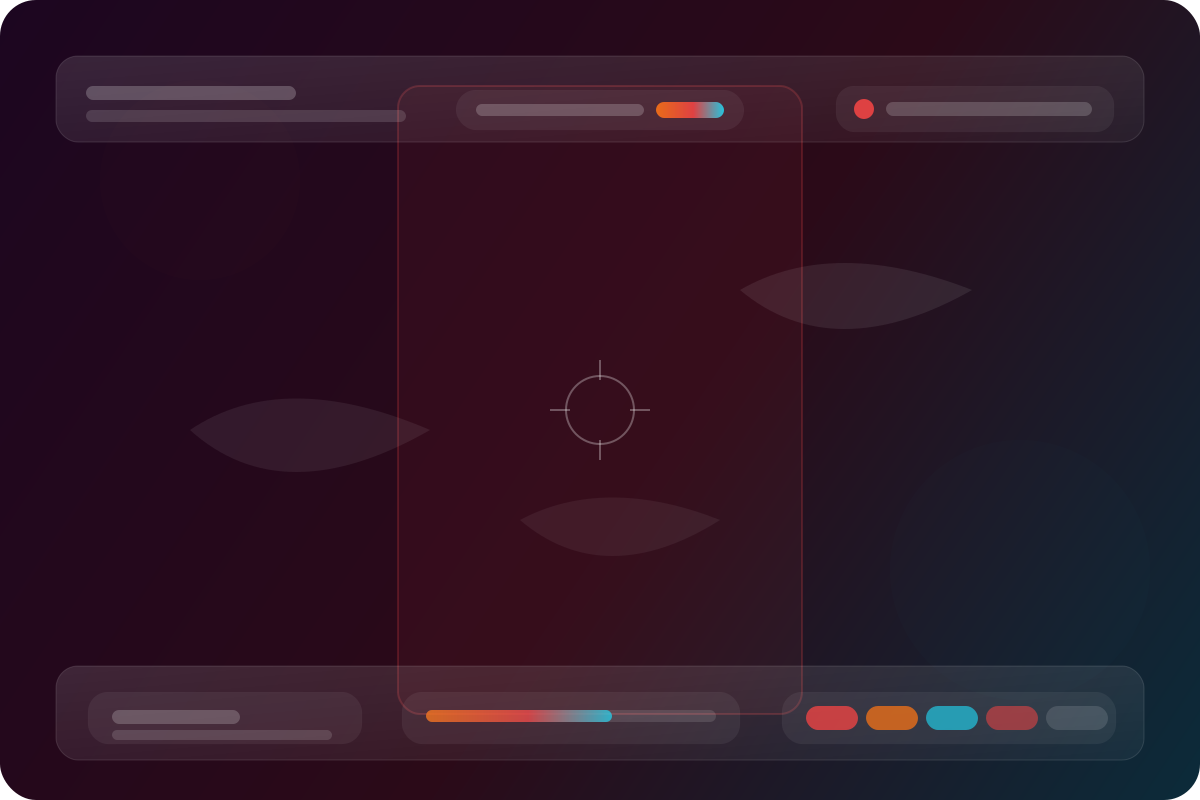
The gallery below contains original SVG visuals designed for this tutorial: a lobby/setup concept, HUD/value-lane callouts, a heat-window budgeting diagram, a power-up grid, target categories, and a video thumbnail.
Play Fighter Fire like a disciplined player
Fighter Fire is most enjoyable when you separate visuals from decisions. Lock a base cannon, wait for center time, use shot caps, and press power-ups only when density is real. Treat bosses as optional heat windows with budgets. If you do those things, sessions become calmer and more stable.
One-minute checklist
- Base cannon locked.
- Value lane: center third only.
- Miss cap: pause after 3–5 misses.
- Power-ups only on clusters.
- Heat windows: budget + timer.