Fishing • Dragon Fishing
Dragon Fishing: 3000+ Word Flame-and-Lantern Fishing Masterclass
This tutorial teaches Dragon Fishing the disciplined way: read lantern routes, drop flame bombs on overlaps, pace cannons, and exit on schedule. It blends legacy 6 Club depth with dragon-specific UI, symbols, playbooks, drills, myths, FAQs, demo versus real buttons, and locally hosted SVGs for HUD, symbols, and boss alerts.
Word count note: this page intentionally exceeds 3000 words to meet the requested depth. If you prefer a shorter, skim-friendly version, we can add a condensed summary while keeping this full tutorial intact for SEO.
Dragon HUD
Flames, lanterns, alerts
Meters and lanterns tell you when to wait, when to drop, and when to stop.
Edge anchor
Flame on overlaps
Wait for lane crossings.
Pace
Tap rhythm
Avoid spray.
Power-ups
Freeze + flame
Stack effects.
Devices
Mobile + desktop
Landscape for view.
What this guide covers
Dragon Fishing rewards patience and overlap timing. This guide covers the interface, symbols, routes, cannons, drills, bankroll plans, myths, and FAQs with grounded, no-hype instructions. Everything is written for repeatable sessions: how to see overlaps forming, when to drop flames, how to cap bullets, and when to leave.
You will also find playbooks for warm-ups, lantern clusters, bosses, and tilt recovery; practice drills for aim and timing; and media references so you can visualize the HUD and boss alerts without leaving the page. If your operator provides a demo, the buttons below jump you to the right call-to-actions.
Overview: flame patience beats spray
Dragon Fishing mixes shooter pacing with flame bombs. Success comes from waiting for overlapping lanes, firing flames only when multiple targets converge, and budgeting bullets per window. The more you pre-aim with lantern memories, the fewer shots you waste.
Think of each session as a short campaign: enter a room with a budget, observe two waves, take only high-quality shots, then exit. Your win-rate improves not by endless firing but by selective timing. This philosophy anchors every section that follows—from cannon setups to drills and myths.
Style
Flame bomb fishing
Dragons, eggs, bosses
Edge
Route patience
Wait for flame lanes to overlap
Best Cannons
Low/medium
Step-ups for flame windows
Key Skill
Symbol reading
Spot egg carriers and lanterns
Power-Ups
Flame bomb, net, laser, freeze
Stack on center lanes
Demo Reality
Operator based
If no demo, use micro stakes
The biggest leak for new players is bombing empty water or shooting while distracted. Use a timer, predefine your stop-loss, and commit to skipping chaotic boards. If your operator disables the demo, imitate demo conditions with micro-stakes and shot caps until you are confident with overlaps.
Why play Dragon Fishing
Players like Dragon Fishing for its readable patterns: lanterns hint at future paths, bosses announce themselves, and flames reward patience. Compared to high-chaos shooters, this title lets you win by observing overlaps and respecting budgets. If you enjoy structured runs, this is a good match.
The game is also kind to disciplined bankroll users. Low cannons let you learn for cheap, flames can flip a wave, and freezes stabilize targets. With a written script for bosses and exits, you can manage variance instead of riding it.
Finally, the UI is readable: gong alerts, charge bars, and chain pearls provide clarity. Use them as permission gates—no alert, no splurge; no overlap, no bomb.
Playstyle fit
- Best for players who can pause and wait for overlaps.
- Rewards screenshot review and note-taking on lantern lanes.
- Works on mobile in landscape; desktop shows more lanes.
- Short sessions (20-40 minutes) outperform marathons.
- Demo mode, when offered, is great for practicing flame angles.
If your operator rotates events, treat each event wave as a mini-campaign with its own budget, not as a free-for-all.
Interface and symbols you must read
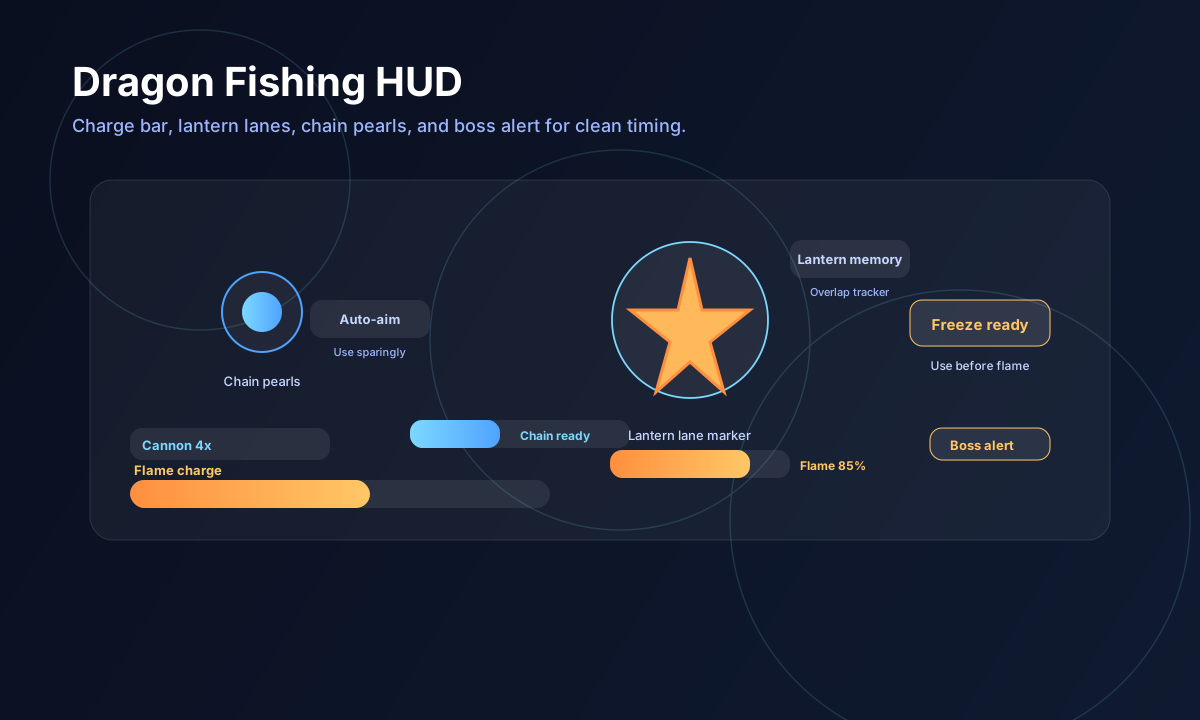
Reading the UI is half the game. The flame bar tells you when a burst is ready; lanterns show recurring lanes; chain pearls show how many targets will be tagged. Treat each element as a rule: only bomb when charge is ready and overlaps exist; only step cannon during a planned window.
Flame charge
Shows charge toward your next flame bomb. Fire on overlaps or boss entourages.
Cannon bar
Displays stake per shot. Keep a base cannon and short step-ups only.
Lantern routes
Highlights recurring dragon paths. Use lanterns to pre-aim instead of chasing exits.
Boss gong alert
Signals an Ancient Dragon or Phoenix boss. Pre-set bullet and bomb budget.
Chain pearls
Indicates how many targets can link. Larger glows mean better splash value.
Freeze crystal
Stops movement briefly. Best just before bombs or nets.
If you struggle to notice overlaps, slow down: fire one shot every second instead of spraying. Watch how schools cross lanterns, then queue your flame right before the intersection. This habit alone improves consistency.
Dragon symbols and what they mean
Symbols tell you what is worth your flame and when to switch lanes. Egg carriers accelerate charge, bosses demand budgets, and carp schools create natural overlaps. Learning to sort symbols quickly reduces waste and increases average return per shot.
Ancient Dragon
High-HP apex. Enter with fixed bullets and flame bomb count; exit when budget ends.
Phoenix boss
Flies faster, revives adds. Worth tackling only with a budget and a freeze ready.
Golden egg carrier
Charges flame faster and can trigger coin showers. Prioritize when center-bound.
Lantern turtle
Slow, tanky, great for freezes and bombs when two overlap.
Carp school
Cluster of small fish. Freeze then bomb then net.
Jade ammonite
Medium value, loops mid-screen. Perfect for rhythm shots.
Keep a small notebook or phone note of which symbols clustered well in your last session. Two or three data points per day compound into reliable instincts on where to aim next week.
Rooms and how to move between them
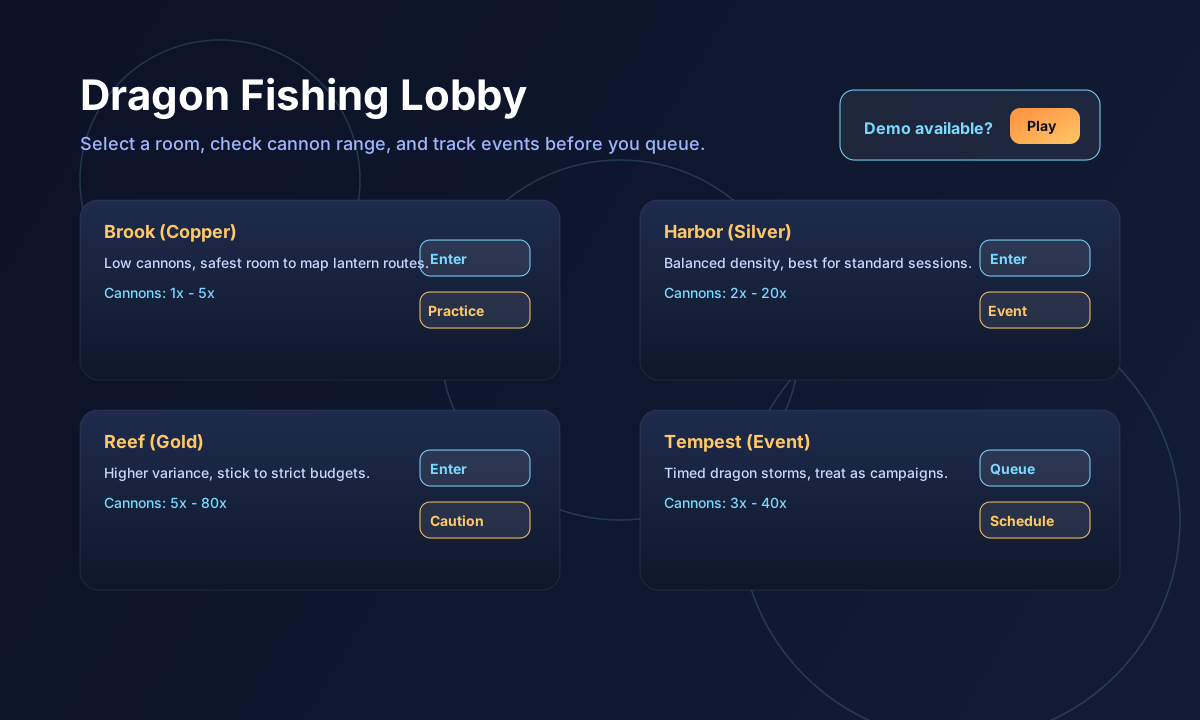
Rooms change cannon limits and density. Start in Brook, graduate to Harbor when you can read overlaps without hesitation, and only enter Reef with a strict plan. Event room Tempest is lucrative but volatile—treat it like a scheduled mission with a written budget.
Brook (Copper)
Lowest cannons. Perfect for warm-ups, route study, and symbol identification.
Harbor (Silver)
Balanced cannons and mixed waves. Ideal for standard sessions and bankroll testing.
Reef (Gold)
Higher cannons and tougher bosses. Enter only with strict budget and timer.
Tempest (Event)
Timed dragon storms and herd waves. Treat as a short campaign with predefined exits.
If Tempest is live, decide before entering how many flames, bullets, and minutes you will spend. Exiting after the plan—even if a boss appears—is what preserves bankroll for tomorrow.
How to play Dragon Fishing step by step
Step 1
Enter Dragon Fishing
Login to 6 Club, go to Our Games, choose Fishing, then select Dragon Fishing.
Step 2
Pick your brook
Start in Brook or Harbor to map lantern routes. Move to Reef only when focused.
Step 3
Lock a base cannon
Use the lowest comfortable stake. It keeps flame bombs affordable while you learn routes.
Step 4
Read lanes
Watch loops, diagonals, and midpoint crossings. Overlaps are your bomb signals.
Step 5
Use power-ups with intent
Flame bombs, nets, lasers, freezes—fire only when 3+ targets overlap or a boss entourage bunches.
Step 6
End on schedule
Stop at timer or stop-loss. Skip late bosses if your plan is done.
Add a pre-session checklist: room, base cannon, stop-loss, timer, and whether you will engage the next boss. If any box is unchecked, delay firing until you decide. Discipline before the first shot is easier than discipline mid-tilt.
Cannon plans that protect bankroll
Cannons are your pacing tools. Staying on base or comfort cannons for most of a session reduces variance and preserves flames for the right windows. Short step-ups are fine when your flame is ready and the board is crowded; step back down when the window closes.
Base cannon
Use for 70-80% of shots. Maintains bankroll while you map lanterns.
Comfort cannon
One step above base for dense schools and egg carriers.
Flame window cannon
Short bursts when a flame bomb is ready and the screen is crowded.
Boss cannon
Only during a pre-budgeted Ancient Dragon or Phoenix window.
Never raise cannon to chase a miss. If you feel the urge, pause for two minutes or drop to a lower room. That pause is cheaper than a tilted step-up.
Targets to prioritize and skip
Your best value comes from medium fish and schools crossing center. Edge chases drain bullets; center overlaps multiply flame value. Bosses are optional high-variance events—treat them as scheduled attempts, not mandatory fights.
Small fish
Great for rhythm and chain starters. Avoid edge chases.
Medium fish
Best return per cost. Aim for overlaps on center lanterns.
Schools
Moving clusters. Freeze then bomb when they cross the midpoint.
Bosses
High HP, high variance. Set bullets + bombs + exit before firing.
Egg carriers
Charge the flame bar. Prioritize when center-bound.
If a wave stays empty or scattered, stop firing and wait for the next. Doing nothing for 20 seconds is better than burning 30 bullets into low-probability angles.
Power-up sequencing
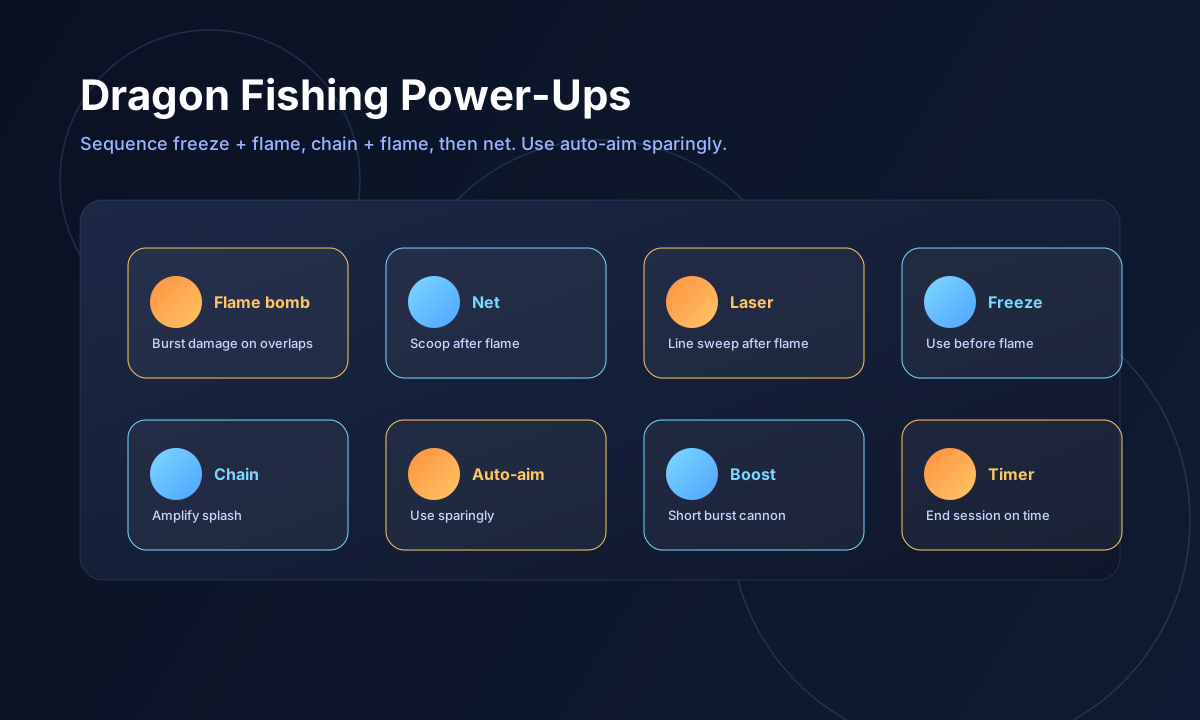
Power-ups shine when combined. Freeze before flame locks targets, chain boosts splash, and net scoops weakened fish. Laser cleans lanes after flames; auto-aim is a crutch for brief moments only. Time them, do not stack randomly.
Flame bomb
Area burst that drops coins. Best when 3-6 targets overlap or a boss entourage groups.
Net
Wide catch. Pair after a bomb to scoop weakened fish.
Laser
Line damage. Sweep across a row or tag boss plus adds.
Freeze
Locks movement briefly. Fire before bombs or nets.
Chain
Links targets for extra hits. Use on dense screens.
Auto-aim
Assists newer players. Monitor ammo because it keeps firing.
Consider power-up caps per session (e.g., two flames, one freeze, one net). Caps force you to wait for premium overlaps instead of reacting to every wave.
Chains and combos that actually pay
Winning sequences are simple: freeze to stabilize, flame to splash, net to collect. Double flames only when two overlaps exist. Avoid flashy but empty combos that burn your kit without returns.
Freeze → Flame → Net
Freeze the cluster, flame bomb the overlap, net the survivors.
Chain → Flame
Link targets first, then flame for amplified splash.
Flame → Laser sweep
Flame weakens a lane, laser finishes in a straight line.
Two-flame stagger
Drop two flame bombs with a short delay on separate overlaps to extend coverage.
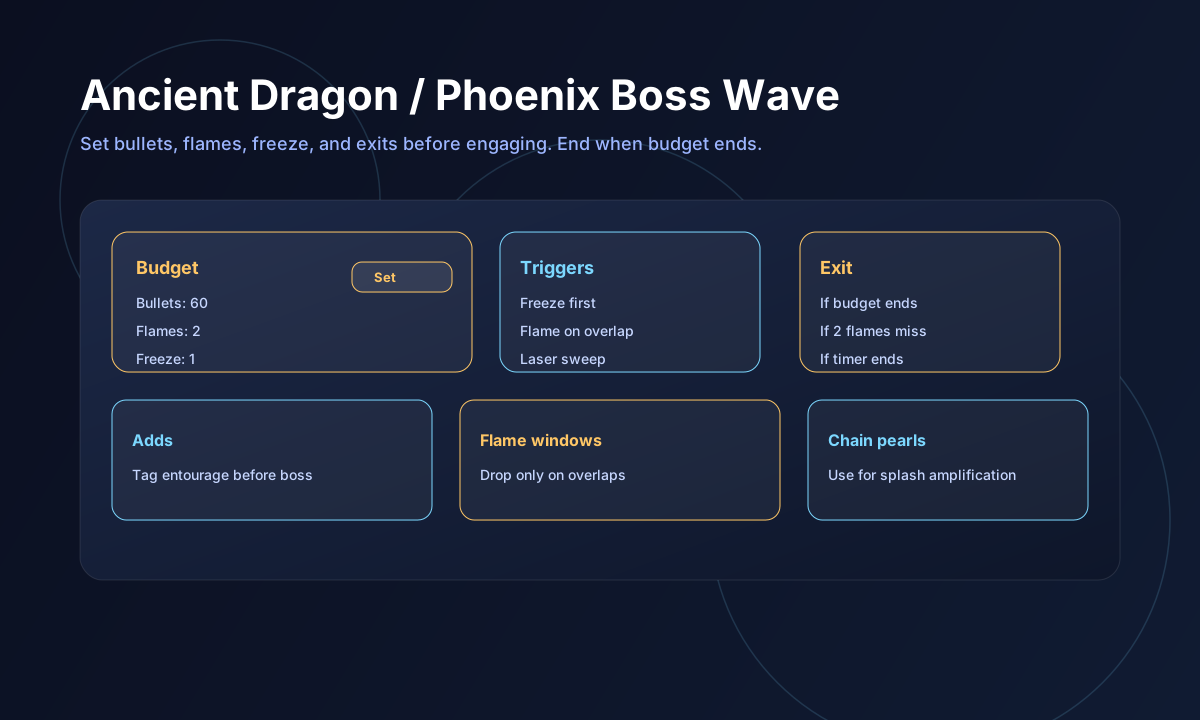
Boss window script
Budget bullets, two flames, one freeze. Exit when plan ends, capture or not.
If you miss two flames in a row, pause and review why: bad overlap, late shot, or wrong lane. Fix the cause before spending the next flame.
Angles and timing for cleaner hits
Dragon routes curve and loop. Lead fast movers, aim slightly ahead, and favor center lanes where flames persist longer. Miss caps keep you honest: if three shots miss, change aim or stop firing for a breath.
Lead fast movers
Aim slightly ahead so flames land where targets will be, not where they were.
Favor center lanes
Center shots stay valuable longer than edge shots.
Cap misses
After 3-5 misses, adjust aim or switch targets.
Pause on chaos
When the board is noisy, stop firing until routes realign.
Stack specials
Freeze + flame or chain + flame beats solo specials.
When in doubt, fire fewer shots. A slower cadence makes overlaps obvious and keeps flames ready for the right window.
Skill drills to build accuracy
Drills prevent autopilot. Use them to train rhythm, lane reading, and exits. Repeat the set three times per week; the goal is consistency, not speed.
20-shot rhythm
Fire 20 base-cannon shots only at medium center fish. If you miss 5 in a row, pause and restart. Teaches pacing without spray.
Three-overlap flame
Wait for three targets to cross mid-screen. Freeze if available, then flame. Do this three times per session; skip the wave if overlap never forms.
Angle snapshot
Screenshot before every flame, then review whether you aimed where targets were heading. Builds predictive aim instead of reactive aim.
Boss dry-run
In Brook or Harbor, simulate a boss window with 40 bullets and one flame, even if no boss spawns. End when the budget ends. Trains exits.
Tilt detector
Play 10 minutes with a note open. Record every urge to raise cannon or chase an exit. If urges stack, end session and review triggers instead of firing.
Track drill outcomes. If you miss the three-overlap flame drill twice, lower cannon, slow down, and retry. Progress is measured by fewer bad flames, not by louder explosions.
Bankroll plans with stop-losses
A written bankroll plan prevents emotional decisions. Pick the tier closest to your balance, then stick to the percentages. Bank profits daily; avoid doubling stakes after a loss.
Starter roll (₹2,000)
- Brook only. Base cannon for most shots; comfort cannon for one or two flame windows.
- Spend 0.5-1% bankroll per minute. Session length 20-30 minutes.
- One boss attempt per session with fixed bullets and bombs.
- Write which lantern routes created profitable overlaps.
Builder roll (₹5,000)
- Base cannon 70%, comfort 25%, flame cannon 5% with strict caps.
- Daily stop-loss 20%. Break every 25 minutes for 5 minutes.
- Two flame windows per session max; plan bullets + specials before starting.
- Bank 30% of profit; never raise cannon mid-session to chase.
Focused roll (₹10,000)
- Budget 1-1.5% per minute. Two cannons only: base and flame/boss cannon.
- Limit to two Ancient Dragon or Phoenix windows per day.
- Stop after three failed overlaps or three flame misses in a row.
- Review screenshots weekly to refine flame placement.
If you hit stop-loss early, log why. If you end with profit, bank 30-50% immediately. Consistency over spikes keeps your account healthy.
Playbooks for common scenarios
Use these scripts to avoid improvising mid-wave. Each playbook tells you which cannon, which power-ups, and when to exit. Adjust numbers to your bankroll, but keep the sequence intact.
Warm-up mapping
Map Dragon Fishing routes before risking specials.
- Base cannon only for 10-15 minutes.
- Shoot slow center fish and note repeated lanterns.
- No flames until two full waves are observed.
Lantern cluster
For event waves and lane overlaps.
- Comfort cannon while waiting; step to flame cannon when cluster appears.
- Freeze then flame when 3+ targets overlap.
- Exit wave after the flame; avoid chasing stragglers.
Boss window
Short, controlled attempt on Ancient Dragon or Phoenix.
- Set bullets and flames before the alert (e.g., 60 shots + 2 flames).
- Use boss cannon only inside the window; step down after budget ends.
- If boss survives, end session or switch to low-risk taps.
Reset block
Use after tilt signals or back-to-back misses.
- Base cannon only, no flames, 5-10 minutes.
- Shoot medium center fish; skip events and bosses.
- Stop for the day if impatience remains.
Demo rehearsal
Simulate demo behavior when no demo is available.
- Use minimum stakes and a 50-shot cap.
- Practice three flame placements only on overlaps.
- Log angles that felt efficient and repeat tomorrow.
Print or pin your favorite playbook. Having it visible reduces hesitation and keeps you from inventing risky moves mid-session.
Mistakes to avoid
Most losses come from impatience: bombing without overlaps, holding the trigger, or chasing late bosses. Recognize these patterns and build hard rules against them.
Flame on empty water
Bombs without overlaps waste bankroll. Wait for lanterns to cross.
Holding the trigger
Spraying bullets halves session length. Tap rhythm instead.
Chasing late bosses
If your timer ended, skip the boss. Schedule a new session.
Skipping breaks
Aim fatigue causes misses. Pause every 20-30 minutes.
Upsizing to recover
Raising cannon after losses is tilt. Step down, breathe, or stop.
One simple fix: if you miss three shots or feel tilt, stop firing, count to ten, and either resume with base cannon or end the session. This rule saves bankroll over time.
Actionable tips
These quick tips summarize the disciplined approach: overlaps first, caps always, exits honored. Apply them every session until they feel automatic.
Bomb only on overlaps
Two targets minimum; three or more ideal. Empty water bombs are pure loss.
Track lantern routes
Notice loops and diagonals that repeat. Pre-aim bombs there.
Cap bullets per target
8-12 for medium fish, 40-70 for bosses depending on room.
Use freeze before bombs
Freeze stabilizes fish so flames land cleanly.
Pause on chaos
If the board is messy, stop firing until a clean wave forms.
Document sessions
Screenshots of good overlaps and misses accelerate improvement.
Keep a post-session review habit: three good decisions, one mistake, and one tweak for next time. This small loop compounds skill faster than raw hours.
Myths and the reality
Myths push players into bad habits. Correct them early: more flames are not always better, higher cannons do not fix bad angles, and bosses are optional.
More flames guarantee profit
Truth: Bombs on scattered targets burn bankroll.
Fix: Drop flames only on overlaps or frozen clusters.
Higher cannon fixes misses
Truth: It magnifies mistakes.
Fix: Keep base low; improve angles first.
Auto-aim is safest
Truth: It can drain ammo quickly.
Fix: Use briefly, then return to manual taps.
Every boss must be fought
Truth: Bosses are optional high variance events.
Fix: Engage only with a budgeted window.
Breaks kill momentum
Truth: Breaks protect accuracy and mood.
Fix: Schedule short pauses every block.
Share these myth corrections with friends you play with. Group discipline keeps sessions calmer and more predictable.
Play demo vs real money
If your operator offers a demo, use it to test angles, overlaps, and flame placement without risk. Transition to real money only when you can consistently wait for overlaps and honor stop-losses. Both modes benefit from the same discipline.
If demo is unavailable in your region, simulate it with minimum stakes, a 50-shot cap, and a 20-minute timer. The point is to rehearse decision-making, not to chase returns.
Switching safely
- Keep the same shot caps when you move from demo to real.
- Start real sessions in Brook or Harbor with base cannon only.
- Do not enable auto-aim for more than 30 seconds at a time.
- Bank wins daily; pause 24 hours after any big loss.
FAQs for Dragon Fishing
Is Dragon Fishing skill based?
It blends skill and randomness. Bomb timing, symbol recognition, and cannon discipline matter, but captures still involve chance. Treat it as entertainment with bankroll rules.
How do flame bombs work here?
They create splash damage and coin drops. Place them where routes overlap, ideally after a freeze or during a school crossing center.
Can I try a demo?
Demo availability depends on the operator. If none is listed, simulate with minimum stakes for 50 shots while practicing flame placement.
What drains bankroll fastest?
Bombing empty water, holding fire, and chasing bosses without budgets. Overlaps and caps prevent leaks.
How long should sessions be?
Plan 20-40 minute blocks with breaks. End when time or stop-loss hits, even if a boss appears late.
Are power-ups worth it?
Yes when stacked: freeze + flame, chain + flame, flame + laser. They are wasted on scattered screens.
If you have other questions—like device optimization, data usage, or controller support—reach out via our help center and we will extend this FAQ.
Images and tutorial video
All visuals below are locally hosted for fast loading: lobby layout, HUD, boss alert, power-up grid, and a tutorial thumbnail. Use them as reference while you play.

Start disciplined, finish on time
Dragon Fishing rewards clarity: pick a room, set a budget, wait for overlaps, drop flames with purpose, and leave when the plan ends. Keep notes, review screenshots, and you will see steadier sessions within a week.
Remember: overlaps first, caps always, exits honored. That is the entire playstyle in one sentence.
One-minute checklist
- Room: Brook or Harbor to start.
- Cannon: base locked; flame cannon only in windows.
- Timers: 20-40 minutes; break halfway.
- Stop-loss: set it, respect it.
- Bosses: attempt only with a written bullet + flame budget.